
What’s that coming over the hill
LRLife get schooled at the Tomcat Academy Words / Pictures Ian M. Garner
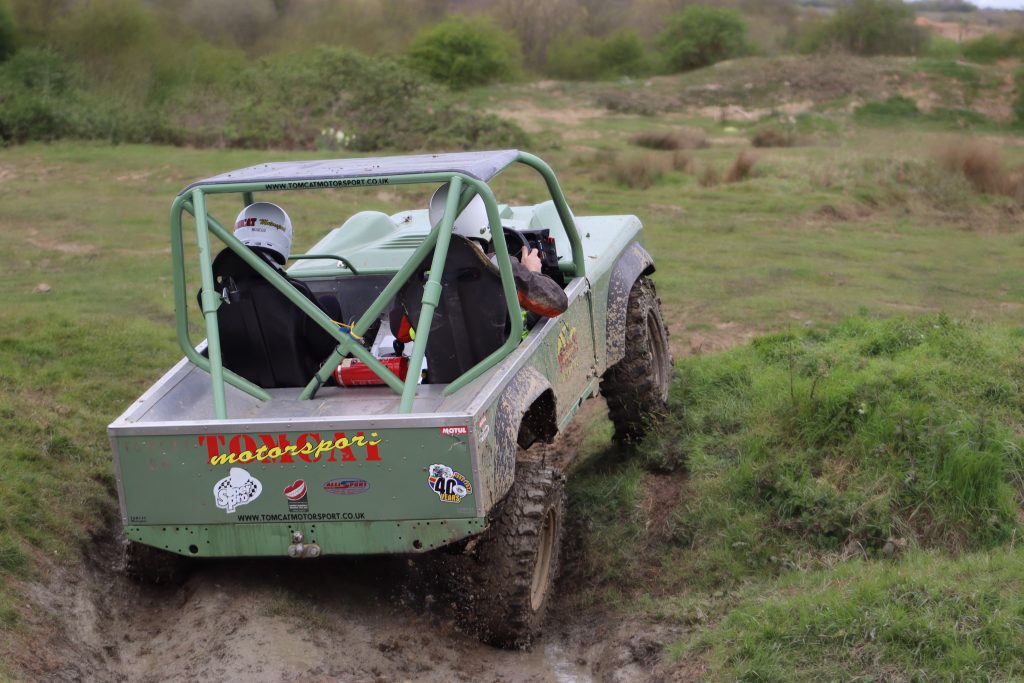
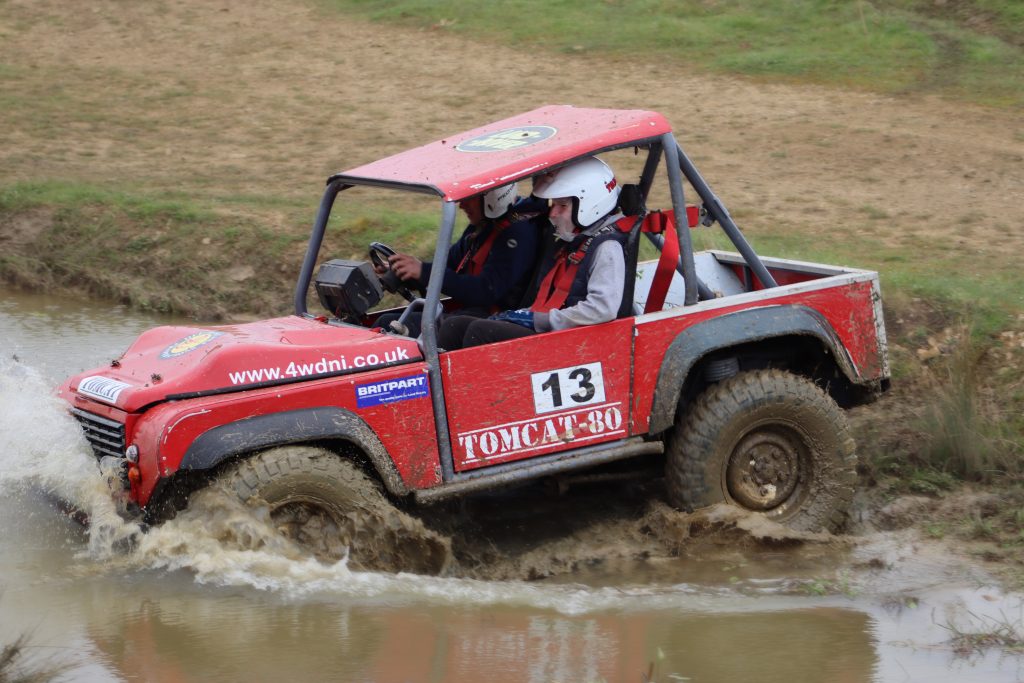
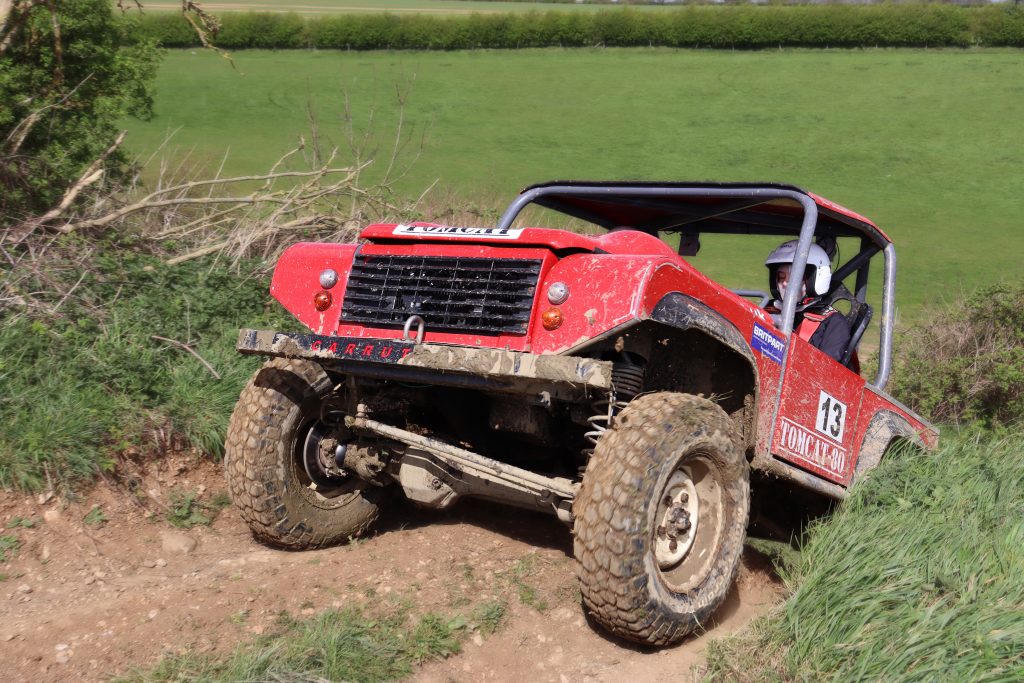
Initially developed by Bowler, the Tomcat is a competition winning off road vehicle known the world over. When Bowler developed the Wildcat, the rights to the Tomcat were sold and in 2001 Tomcat Motorsport LTD was born to carry on the production and development of the Tomcat. The current range of Tomcats includes 5 different models; all built with the same basic ingredients.
Below – This Tomcat 100 was set up as a road going vehicle and brilliant it looked indeed in a resplendent Orange.
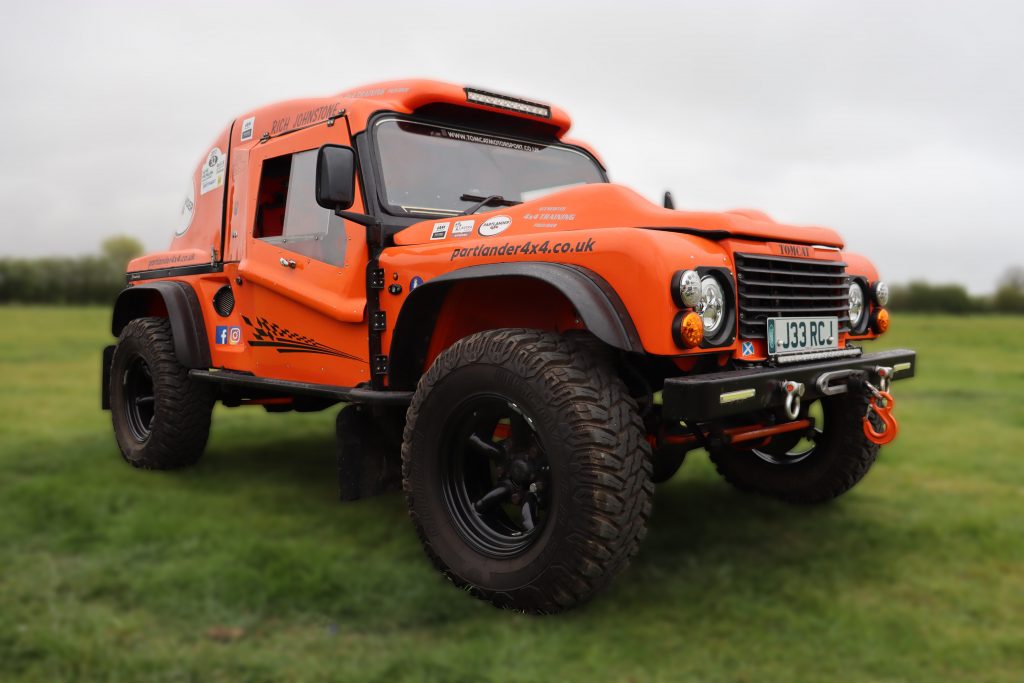
The start of the range, and the one used in the Academy is the 80” Tomcat. Small and agile, the 80” is a purpose-built trials machine that is fully ALRC (Association of Land Rover Clubs) compliant giving you a host of events to compete in. However, more on this incredible machine later. Next is the 88” Tomcat, which is where it all started back in the 1980’s. This one is a bit of a jack of all trades. Short enough to trial within the ALRC and stable enough at speed to be used in Competition Safari’s. The Tomcat 93” matches the wheelbase of the original Land Rover Ninety and was developed to compete in challenge events. With very short overhangs, front and rear, the 93” is a serious bit of kit indeed. Perhaps the most famous vehicle in the range is the 100” Tomcat, initially based on the hardware from the original Range Rover, the 100” Tomcat is hugely respected in off road circles and one of the most popular vehicles for off road racing in the UK. The final vehicle of the range is the 106” Tomcat, and is more suited to the longer endurance events such as Rally Raids. The extra length can accommodate larger fuel cells to give the range required and the additional wheelbase adds more stability for the faster events. During the day, I was chatting to the Tomcat team about their future plans, and I was told that there are further evolution’s afoot with some genuine world first technology being developed, however I was sworn to secrecy but am excitedly awaiting further news.
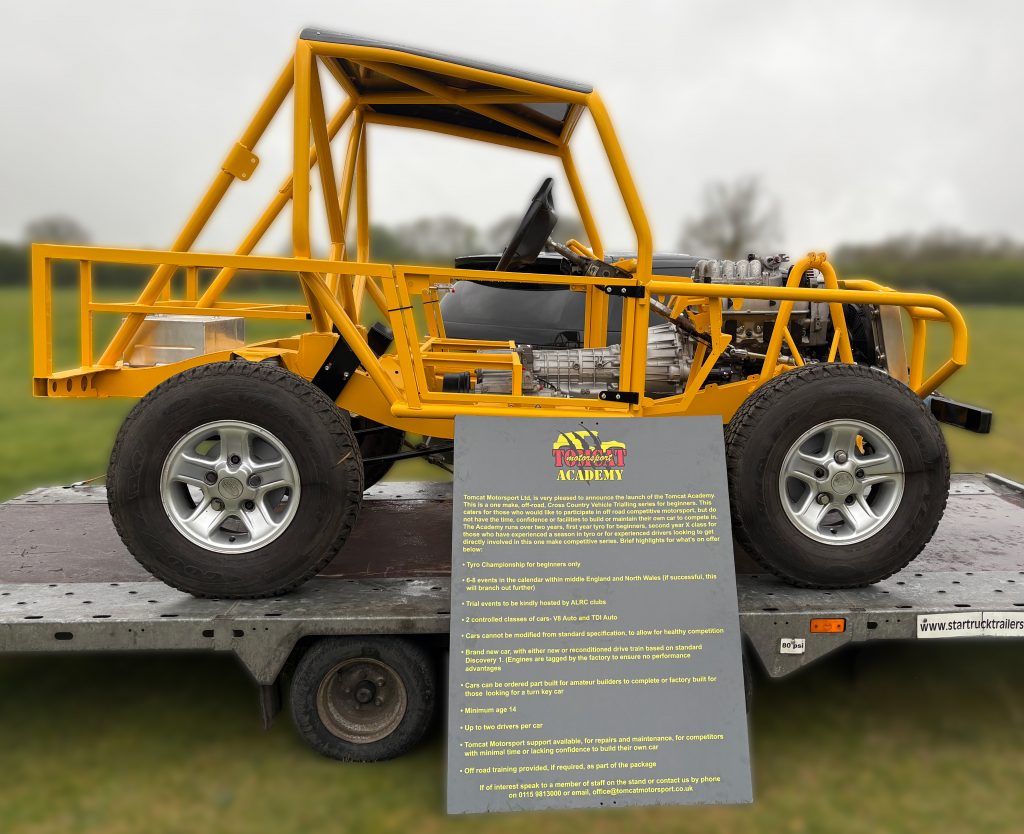
Above – This partially built Tomcat 80 shows the chassis / space frame in all its glory
The backbone of the Tomcat is the spaceframe. Based on Land Rover geometry, the spaceframes are to Tomcat’s own specification and are substantially stronger than a standard Land Rover chassis, thanks in part to the roll over protection. The key to the design is affordability. By using common Land Rover parts, the costs of maintenance and repairs is considerably cheaper than using bespoke items. You break your Tomcat and the parts can be easier obtained from your local parts supplier. This makes owning and competing in a Tomcat assessable to more people.
The engines, transmission, axles, brakes and steering are all sourced from Land Rover vehicles, mainly Defenders and Discoveries. To build your Tomcat you can either purchase a suitable donor vehicle or if your wallet is large enough, purchase new crate items. The body panels are either GRP or flat alloy, both easily and cheaply repairable or replaceable. The clever part of the vehicle is the suspension set up, and this is where the Tomcat knowledge and experience come into play. The set up is based on standard Land Rover coil spring geometry, but here’s the thing. The springs are dual rated, to Tomcats own specification and are fitted with Fox shock absorbers, meaning excellent wheel articulation.
Above – A supple suspension set up gives the Tomcat 80 fantastic articulation.
So back to the Academy. The Tomcat Academy is designed to make grass roots trailing more accessible. The vehicles are all based on the Tomcat 80” and meet ALRC regulations for Tyro, RTV (Road Tax Vehicle) and CCV (Cross Country Vehicle) trails. There are between 6 to 8 events a year, all hosted by the ALRC.
The vehicles themselves come in two different specifications, both competing in different classes. You can have either a 2.5 Litre 300 TDi Turbo diesel or a more potent 3.9 litre Efi V8. Both engines are mated to a 4-speed automatic and two speed transfer box, with manual locking centre differential. Automatics are favoured for competition as you get constant drive to the wheels unlike a manual where you lose drive when you drop the clutch – albeit momentarily.
The aim of the day was to give prospective buyers the chance to sample the Tomcat over a series of trials sections, with an experienced driver next to you to point you in the correct direction and advise how best to tackle the various obstacles. You could either drive the RTV sections yourselves, or if you were feeling brave, be a passenger for the CCV sections. There were four Tomcats on the day, two vehicles were set aside for customer drives, and the other two Tomcats would be driven by the experienced drivers.
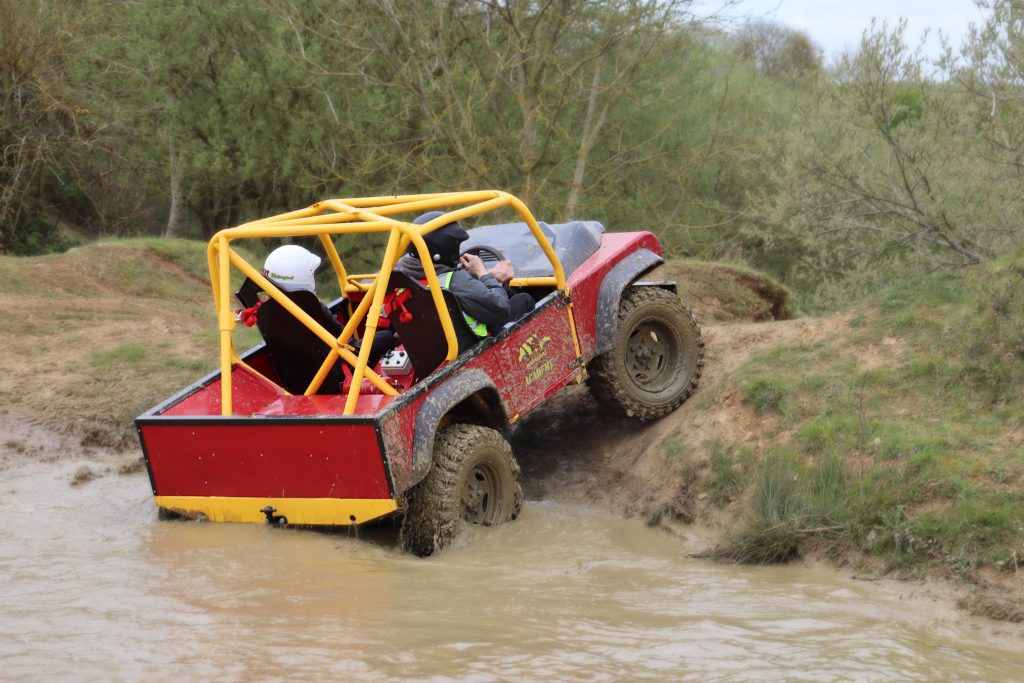
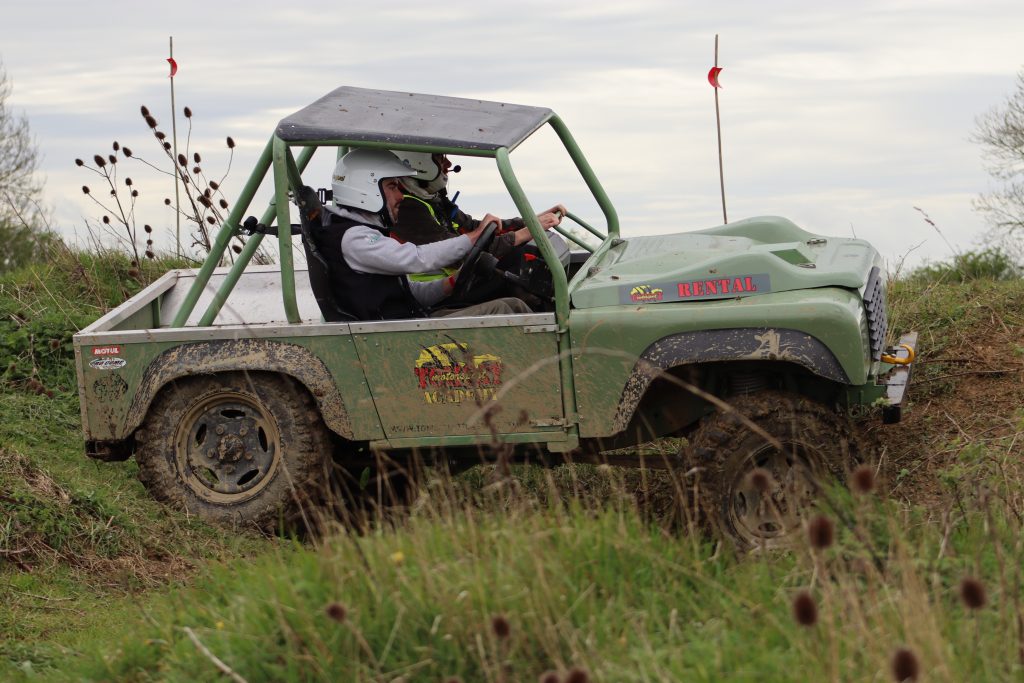
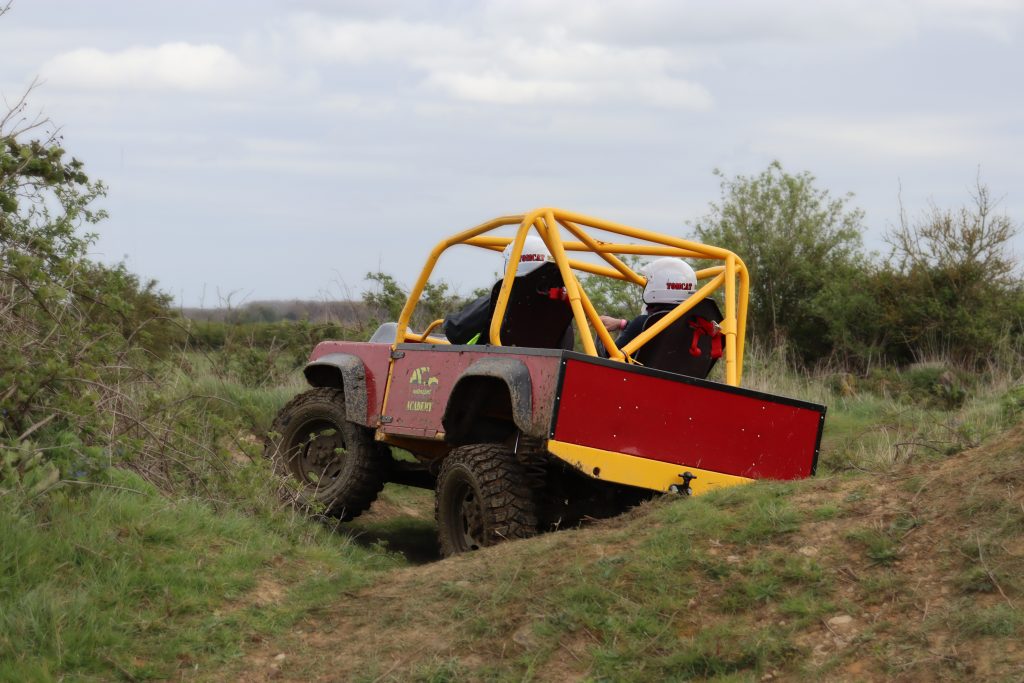
Above, Left & Right – A variety of terrain was used to form the 9 different sections for the day, all of differing complexity and difficulty.
Soon it was my turn to have a go, so helmet on I was strapped into the harness and ready to go. The first Tomcat I sampled was the V8, you switch the ignition on, press the button and those 8 cylinders fired up straight way with a low sounding burble. First gear selected, I gently pressed the accelerator and off we went. Today wasn’t about speed, the Tomcats all remained in first gear for most of the day, it was more about how they dealt with the various terrain challenges that were ahead of us. We got to the first section, where my navigator pointed out the various gates as we proceeded. The courses were laid out in typical trails fashion. 12 gates were set out, over the ground, the aim is to drive through them without contact, reversing or getting stuck. Whilst no scores were being taken during the demonstrations, in a competitive trial you would get the number of points of the last gate you successfully went through, meaning a low score or better still zero, is your target.
The first obstacle was a gnarly cross axle. In my own Series, I would have used more throttle as wheels would be in the air, but in the Tomcat, I kept a more sedate pace. The front wheels cross without issue, then come the rear’s I expected to hear a scramble of dirt from the tyres as they lifted and searched for grip but no. The Tomcat just drove over it. No fuss, no drama, just the low-down grunt of the V8 pulling us through. Impressive to say the least, the articulation was amazing and whilst I did see Tomcats lift wheels during the day, it was not as common as you would expect.
Below – This was one of the more milder climbs that would be driven during the day.
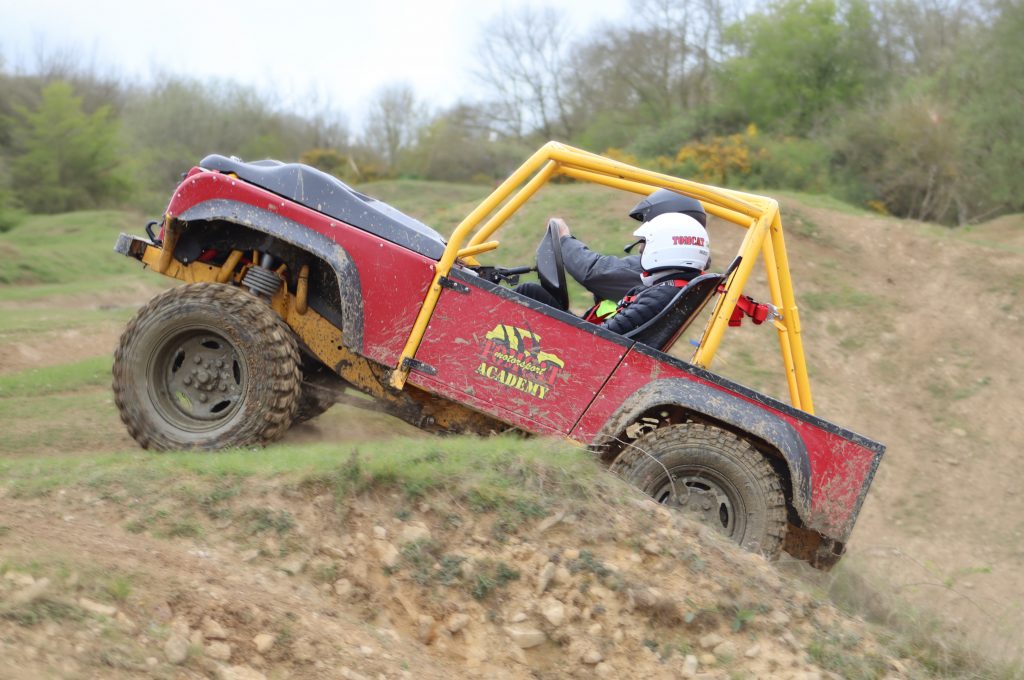
My next surprise came shortly after. We were creeping down a steep embankment when the navigator told me to turn sharp left. I noted the gates and thought there is no way we will make that turn. Being used to Series Land Rovers, I am used to turning circles more akin to oil tankers, but a twist of the steering wheel onto full lock and we made it round with ease. No tyres rubbing on the chassis rails either. This thing is super nimble I remember thinking. All too soon, the 12 gates were driven, and we headed to the pits.
Now I have done trailing before, albeit once, and the Tomcat is an amazing vehicle to drive on the sections. It felt secure, capable and most of all good fun! My next go was on a more challenging section and this time I got to sample the TDi. Strapped in, we set off and immediately the terrain was more challenging. Steeper climbs and descents were easily tackled although the Turbo Diesel need a bit more throttle that the V8. The most heart raising moment came at a slide slope. I have tackled many of these over the years, but I can quite comfortably say this was the most extreme angle I have ever driven a vehicle at, good job the straps did their job if keeping us in place! A slight navigational error though one of the gates later and we were heading to the pits. Having sampled both Tomcat engine options which, one would I chose. Well, it has to be the V8. The grunt at low revs made it easier to drive and in my mind gave more control, and when it came to the climbs, the howl of those 8 cylinders was just intoxicating!
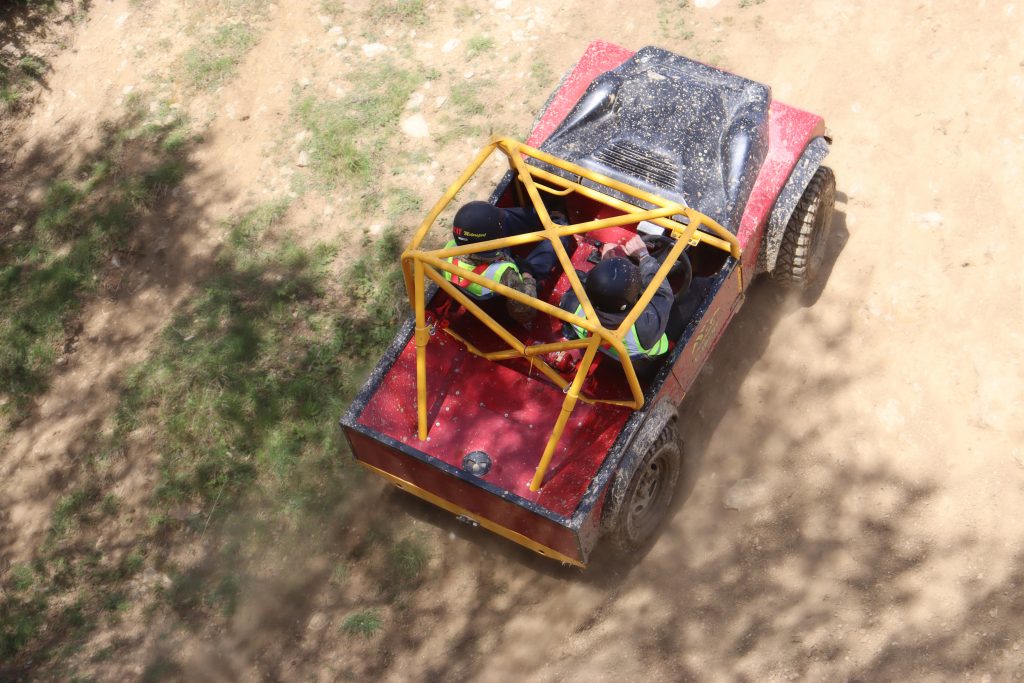
Above – You may be forgiven for thinking this was an Ariel shot, but it wasn’t. The climb really was that steep and yes, the Tomcat made it!
My final jaunt of the day was as a passenger for some of the CCV sections, telling the driver to just go for it, I was in for a treat. He warmed up on one of the RTV sections first before heading to Section 9. Shortly after we started, my driver yelled at me to hang on tight as it was going to get rough, before climbing up a steep slope at speed, the roll cage pushing tree branches out of the way. Next, we turned left down a slope that must have been 60%, you couldn’t have walked down it and yet here we were driving it! A few steep climbs and side slopes later and we headed for the final two gates. A tricky entrance and exit from gate two had us leaning over at quite the angle, and I had finally seen a Tomcat cross axled! We were not going forward anymore, and the vehicle was teetering at an unbelievable angle. My driver slowly reversed and managed to keep us upright. The section was the most extreme obstacle I have ever seen someone tackle in a vehicle, and it was no surprise that the Tomcat didn’t quite make it. We headed back, and as I got out, I thanked my driver; that drive was quite something to say the least.
The whole day was great fun and a huge thank you goes out to Tomcat Motorsport and the support team for putting on a great event. They were all friendly, very patient as they took you around the course and most of all keen to ensure everyone had the best day out they could. Coffee, Bacon sandwiches and wood fired Pizza were all available to make the day. The Tomcat 80 is an incredibly capable machine; you can get one and be immediately competitive in both RTV and CCV trails. The ethos of standard Land Rover running gear makes this a cheap form of motorsport accessible to many. It may not be about the speed, but the action is sure to keep your adrenalin flowing. If you want to know more, and I recommend that you do, check out Tomcat at www.tomcatmotorsport.com