Born in 1971: 55 Years of the Series 3
Both admin Ian and the Series 3 turned 55 this year. We take a look at the last of the leaf sprung Land Rovers
Now I may be biased but 1971 was a great year. I was introduced to the world and barley 2 months later, in October, so was the Series 3 Land Rover. The Series 3 followed Land Rovers winning formula of evolution not revolution, so it was hardly a huge technical leap forward from the Series 2a it replaced.
Not that we knew it at the time, but the Series 3 would be the last hurray for the leaf sprung offering from Land Rover (Santana’s aside). Production carried on until 1985, with the last of the Series 3’s being on a C registration plate.

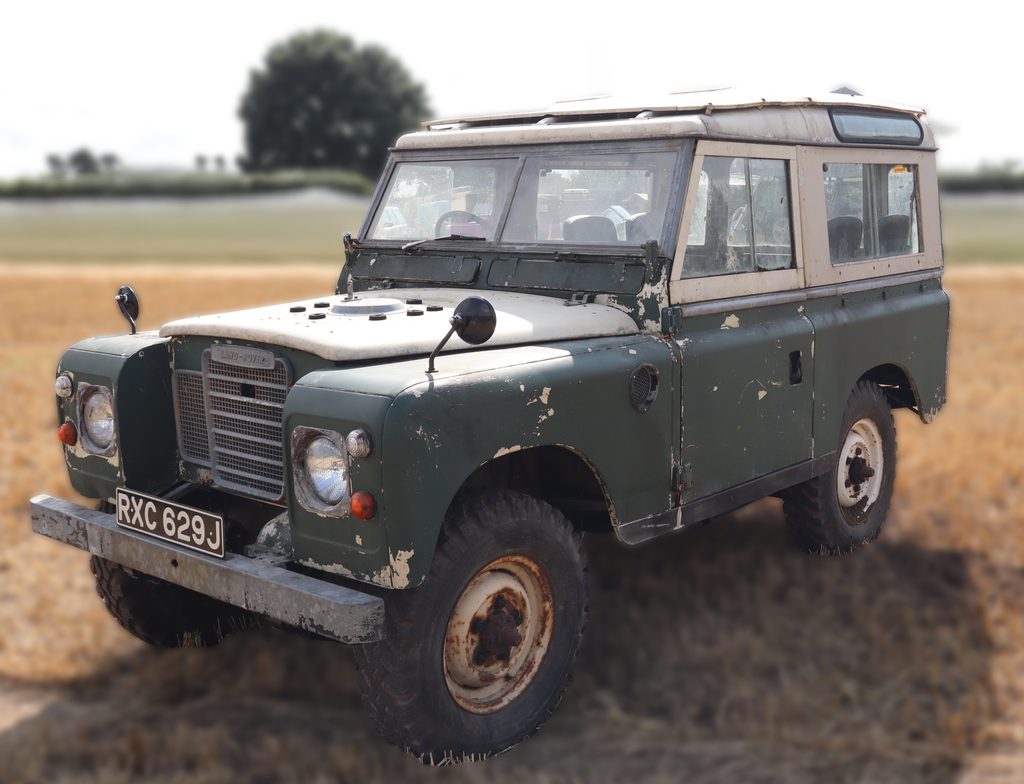
Above left – This is the prototype 109″ 6 cylinder Series 3, now part of the Dunsfold Collection. Above Right – This is the first production Series 3 88″ now in the hands of a private collector.
Styling wise, there were a few minor differences with the Series 3, first and foremost was the front grill. Gone were the wire framed grills that had been part of Land Rovers history since the very beginning, replaced with a plastic offering. The door hinges were a more modern and flatter design than previous and on the passenger side was a grill for the heater air intake. Yes, a heater, the Series 3 had one as standard!
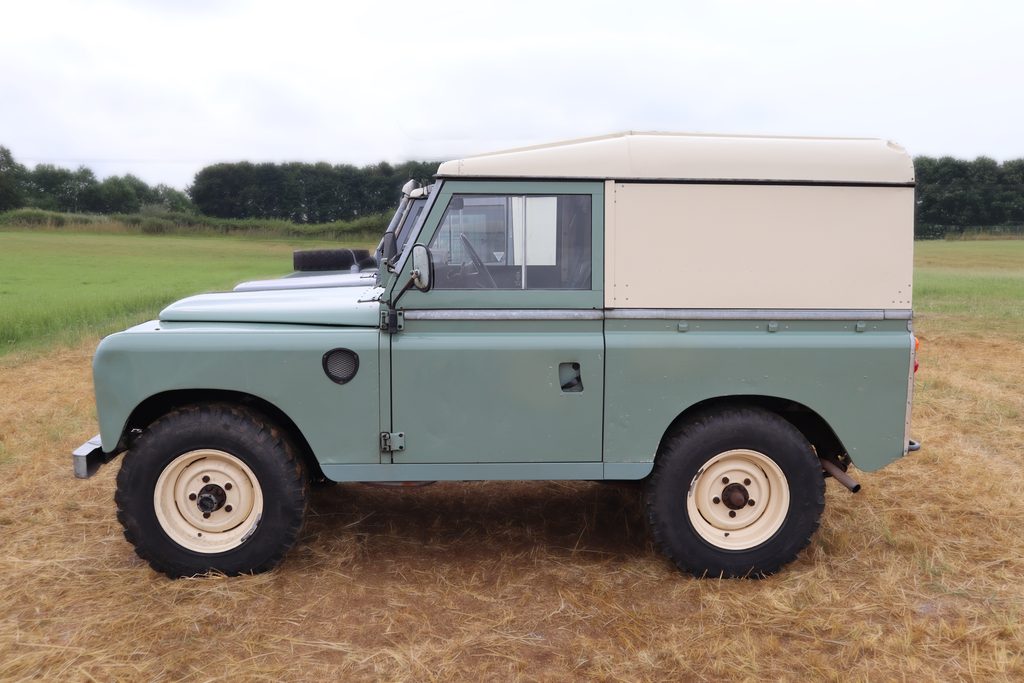
Body styles and wheelbases remained per previous, meaning an 88” short wheelbase and a 109” long wheelbase. Soft Tops, Hard Tops and Pick ups covered the utility markets and Station Wagons were offered in 7 seat (88” 3 door), 10 seat or 12 seat (109” 5 door) varieties. The ½ Air Portable and the 1 Ton, both introduced in 1968 on the Series 2a continued as Series 3 versions also.
Below – Flatter door hinges and a heater air vent in the wing are just two of the identifying features of the Series 3
Inside the steel bulkhead fascia and central dials were replaced by a dashboard with the dials located in a binnacle in front of the driver. Truly modern stuff I think you’ll agree.
Engine wise the line up from the Series 2a remained with both petrol and diesel 2.25 litre offerings (still 3 bearing) and a 2.6 litre straight 6 petrol. Gearbox wise, it still had a 4-speed manual linked to the 2-speed part-time all-wheel drive transfer box, however you now got synchromesh on all gears meaning double de-clutching was now a thing of the past!
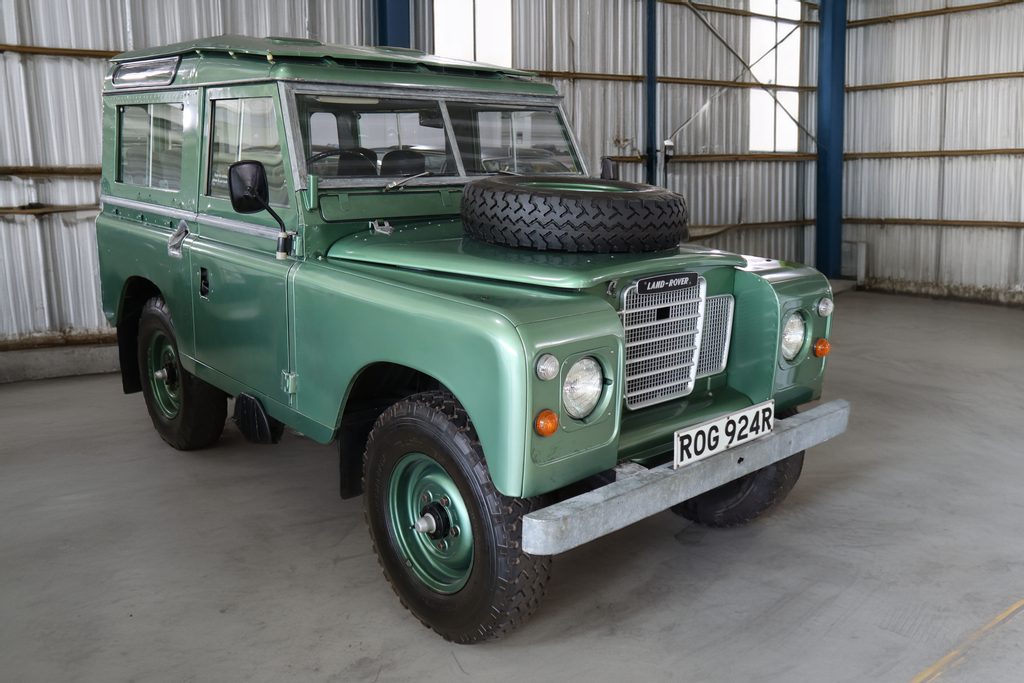
Above – The 1,000,000th Land Rover Made was a Series 3 built in June 1976
Throughout the life of the Series 3, several new models were introduced. The first and perhaps most exciting was the Stage 1. Launched in 1979 to replace the 2.6 litre engine, the Stage 1 had a de-tuned version of the 3.5 litre V8 that was first seen in the Range Rover. Linked to a 4-speed manual the Stage 1 had permanent all-wheel drive with high and low ratios with a locking central differential. The Stage 1 was only offered in the 109” wheelbase, although a small number of 88” versions were made. Visually the Stage 1 had a new front, gone was the inset grill that had been a Land Rover feature since the very beginning, replaced by a flatter front and a longer bonnet.
Below – The Stage 1 V8 can be easily identifying by the longer bonnet and flatter front.
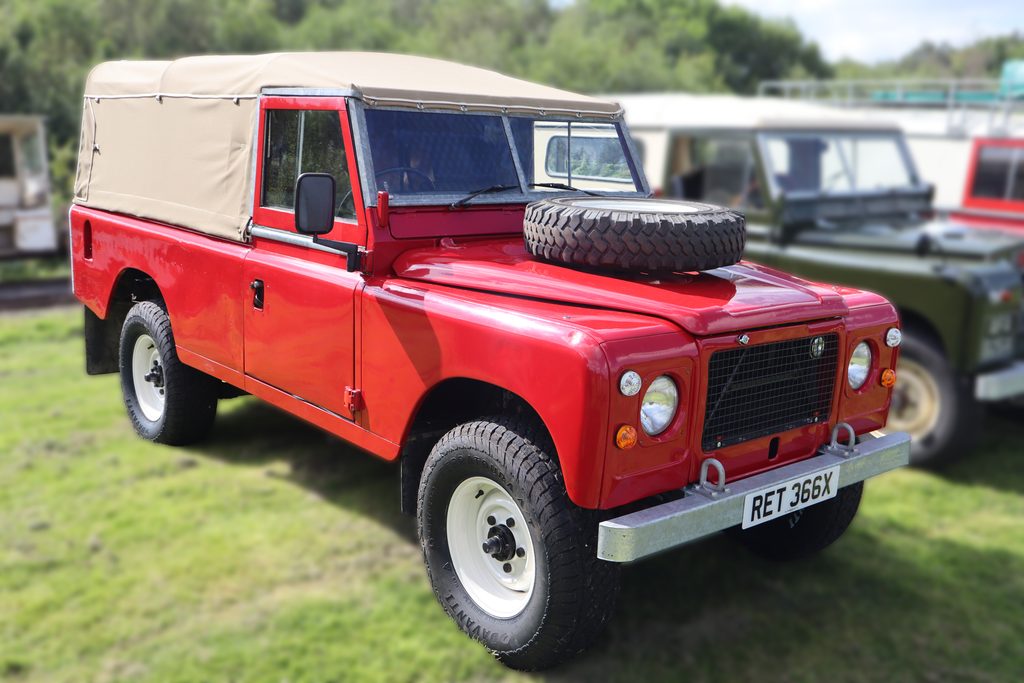
In 1981, the 4-cylinder engines were updated, with a 5 bearing crank shaft. These were referred to as 2.3 litre engines, even though they had the same 2.25 capacities as their predecessors.
A further new model was introduced in 1982, in a bid to stop the Toyota Hilux stealing pick up sales. Called the High Capacity Pick Up (HCPU), it offered a larger, wider load bed.
Also in 1982, Land Rover introduced a more luxurious Station Wagon on both the 88” and 109” wheelbases. Called the Country, the seats were cloth rather than the vinyl offerings of previous. The county’s also offered a new colour palette which included Masia Rad, Roan Brown, Russet Brown, Stratos Blue and Trident Green.
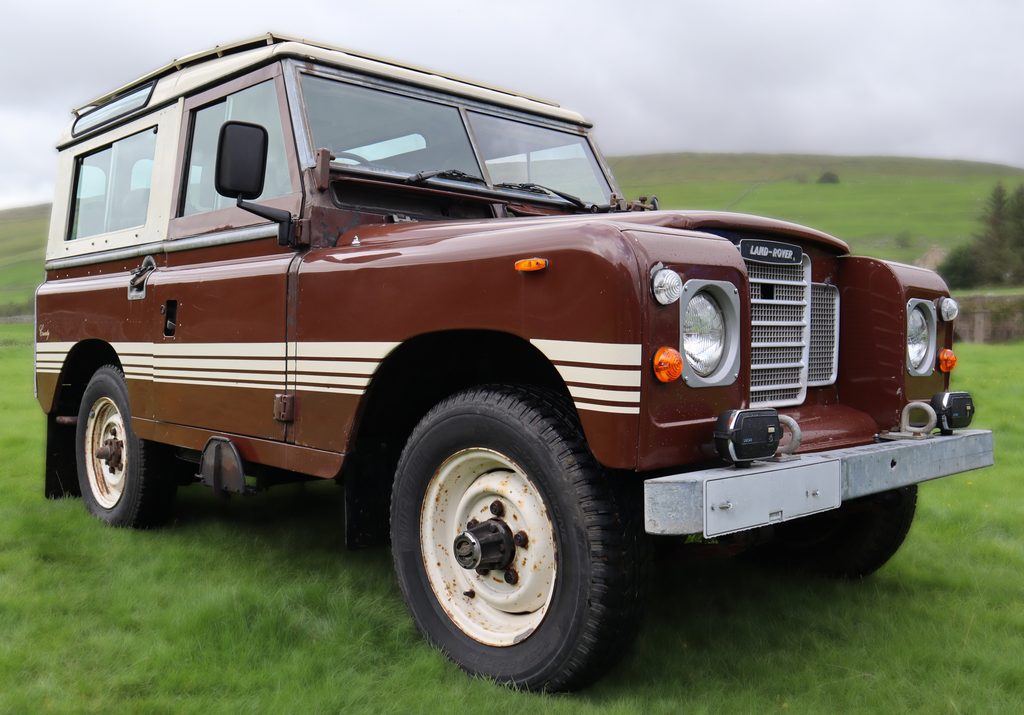
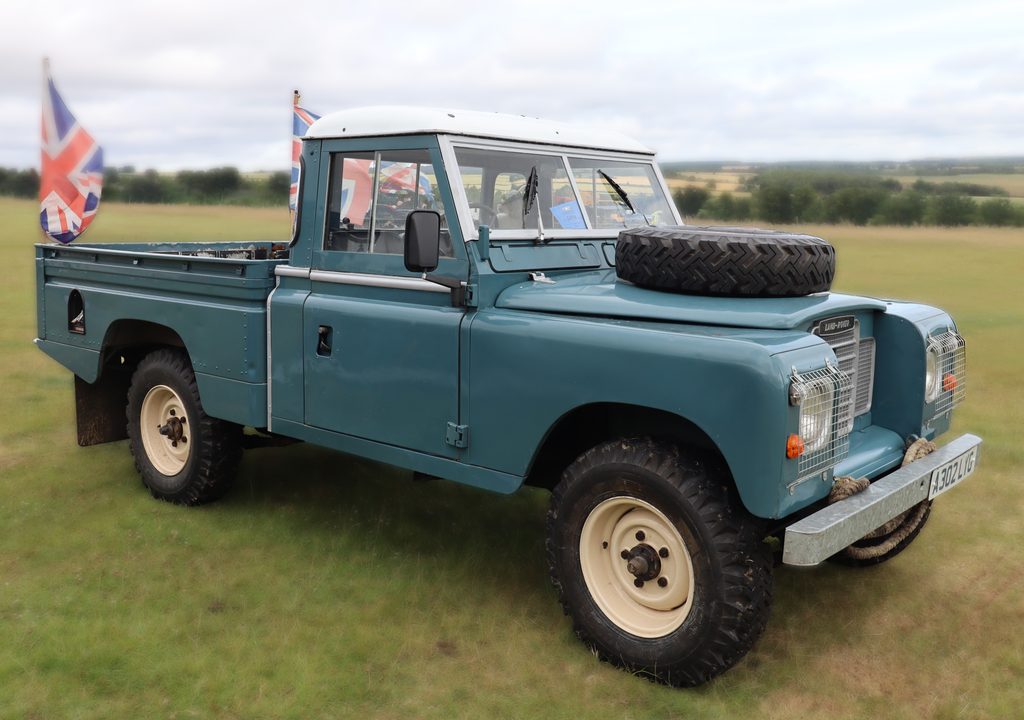
Above Left – The 88″ County can be identified by its side stripe and County script on the rear wing. Above Right – The High Capacity Pick up has a separate rear load bed and was design to take sales from the Toyota Hilux.
Not long after this, the OneTen was launched with a coil spring suspension derived from the Range Rover, and then a year later the Ninety was introduced. The Series 3 days were numbered and production ceased in 1985, at least in the UK. Santana continued to build leaf sprung Land Rovers into the 21st century and introduced a Series 3a and even a Series 4.
Driving a Series 3 in certainly simpler thanks to the synchromesh on the gear box. It also a nicer place to be as the dashboard gives it a more modern feel, less utilitarian that the steel bulkhead and central dials of old. The Series 3 has its own fan base for sure and after 55 years, it is still going strong with many still being used as daily drivers by the hardcore fans!
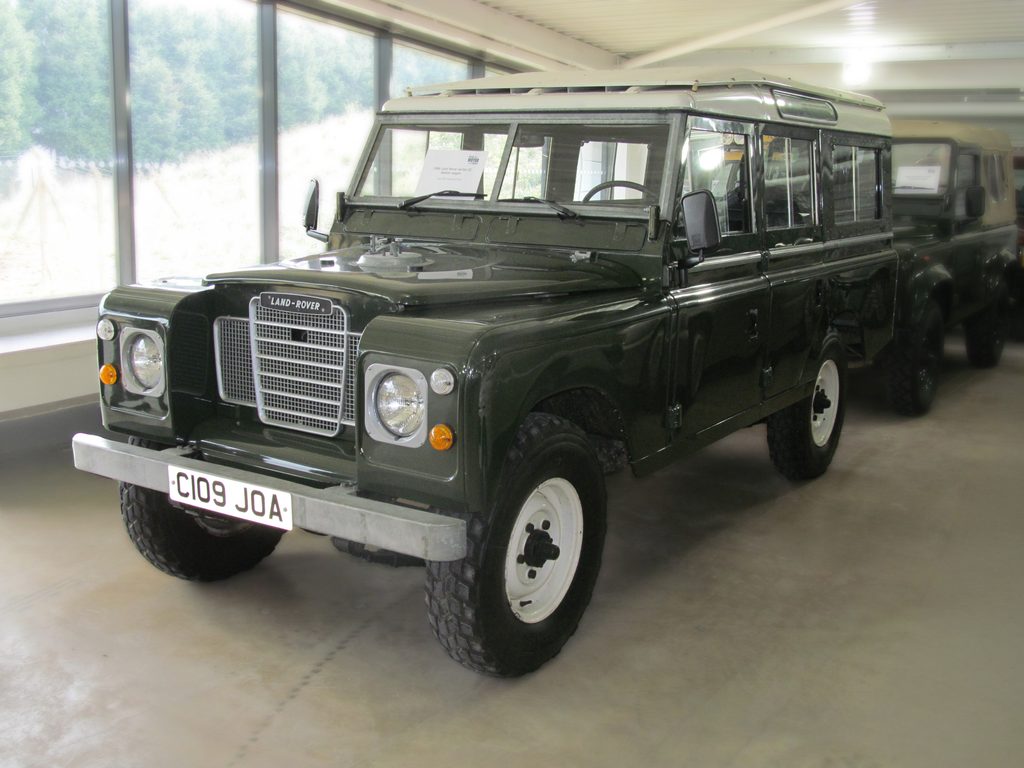
Above – The last Series 3 made was this 109″ Station Wagon and is still owned by Land Rover.