
From Paddock to Pilgrimage: The Ultimate Midlife Crisis (Part One)
Well if you are going to have a mid life crisis you may as well go large or go home. Meet Paul, Lucy & Peanut the Cat
Words / Pictures – Paul & Lucy Atkins
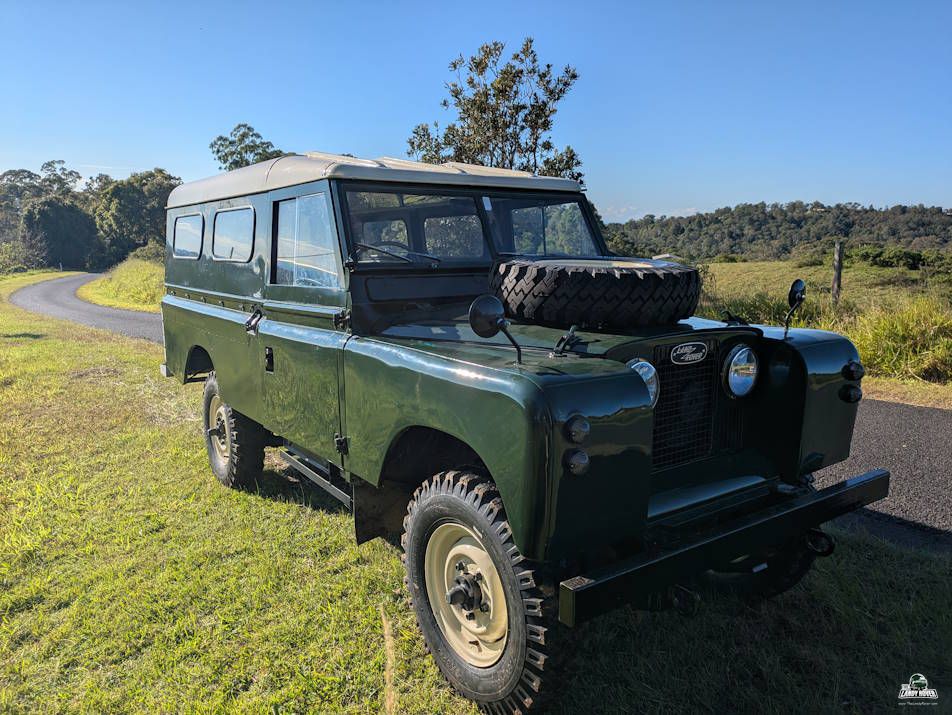
Fresh off the back of restoring a 1972 VW Kombi, I was riding high on that dangerous wave of DIY confidence. The garage was empty, my knuckles had finally healed, and I needed a new project. That’s when an online advert caught my eye: a 1960 (ex-army), Series 2 Land Rover for $2,500, sitting out in Dalby, in South East Queensland, Australia.
My wife and I hopped into our newly finished, almost-smoothly running Kombi and made the drive out to take a look. Leaving our slightly overheating kombi parked by the fence, we walked over to the Landy—and to say it was a “small project” is doing a massive disservice to the word. It had been sitting in that paddock for fifteen long years, left to the elements of Queensland’s wet seasons and baking sun, plus it was underneath a tree covered in sap.
Anything that could rust was actively rusting. The paint was baked and stained by fifteen years of falling leaves and and bits of tree, and the interior was less “classic British utility” and more “meticulously curated rat’s nest,” stuffed to the brim with decades of junk. Under the hood sat a Holden 202 straight-six engine that had completely seized up. I gave the dash a hopeful prod to check the electrics. Total silence, except for one lone windscreen wiper, which gave a single, pathetic, agonisingly slow swipe across the glass as if to say, “Please leave me alone.”
I took the hint. I turned it down, we got back in our pristine Kombi, and went home to Brisbane.
But a funny thing happens when you look at an old Landy. You don’t just see the rust; you start wondering about the life it lived before it was left to die under a tree. Out of pure curiosity, I sat down at the computer, opened up the REMLR (Registry of Ex-Military Land Rovers) database, and typed in the chassis number, which I had found on the compliance plate that was half painted over.
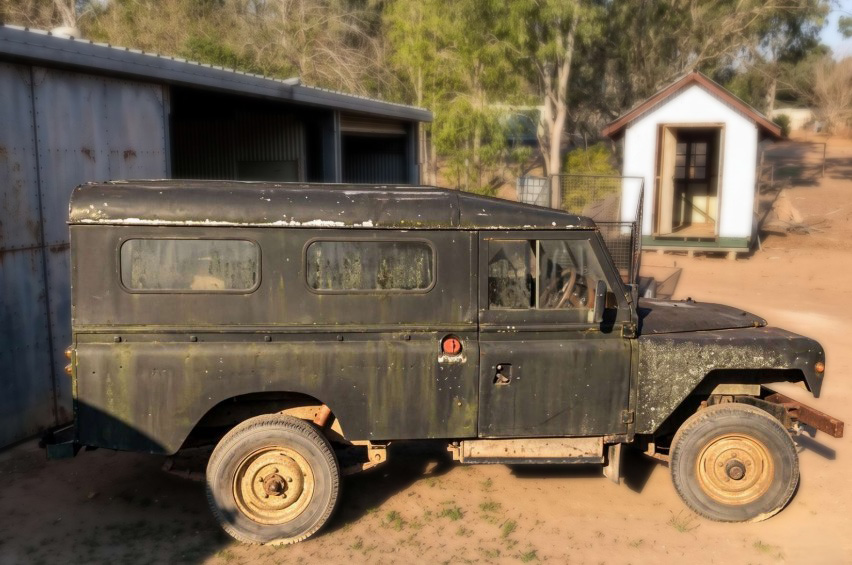
Above – The Land Rover in “As discovered” condition!
As the web page loaded, the paddock dust cleared. This wasn’t just an old farm hack—it was a piece of living history. The records showed she was an ex-Australian Army vehicle, with a deployment history tracing directly back to the Vietnam War era. I spent the rest of the evening down a rabbit hole, researching the exact unit she served with, the roles she played, and the places she had been.
Looking at the photos I’d taken earlier that day, the rusty panels took on a completely different meaning. The seller had told me the Land Rover had belonged to his uncle and had spent its civilian life working hard on the farm. He’d mentioned he had some interest from buyers wanting to dump it back onto a property as a cheap farm bash-around, but he was holding out. He wanted someone who would actually restore it.
Learning about its military past settled it for me. This Landy had survived war time service, been in Nui Dat and Long Tan in Vietnam, moved to the bush, and then spent fifteen years being slowly swallowed by a tree in Dalby. It felt flat-out wrong to leave a war veteran out there to dissolve into the dirt or get thrashed to pieces on a farm.
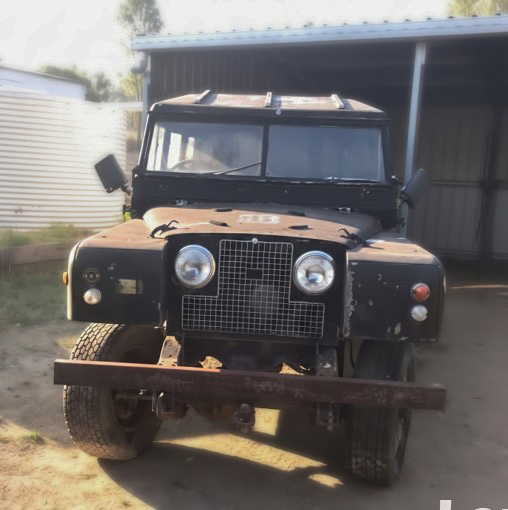
Left – You will note that the front wings have been cut. This was a feature of Australian Military Series Land Rovers.
A wave of sympathy (or outright madness) washed over me. I called the seller back and offered $2,500 and said I would restore it. He happily agreed and was glad it was going to a good home. The next weekend, I hired a car trailer, hitched it up, and headed back to Dalby and picked her up.
Driving back to the shed with that boxy silhouette in my rearview mirror, the reality sank in. I was officially a Series owner—even if my new pride and joy was currently full of rat droppings and didn’t run.
Once the trailer was backed up to the shed and the heavy lifting was done, the reality of what I’d actually bought truly set in. The first phase of the restoration wasn’t structural or mechanical; it was a high-stakes eviction notice. Armed with a heavy-duty mask, thick gloves, and an old vacuum cleaner, I began slowly digging through fifteen years of accumulated paddock junk. It turned out the Landy hadn’t been entirely abandoned—it had spent the last decade and a half operating as a multi-generational, luxury apartment complex for local rats.
With the rodent empire finally cleared out, I started unbolting a few of the easier panels to get a proper look at the chassis and bulkhead. Once I had a rough idea of what I was dealing with, it was time for the moment of truth: seeing if the retrofitted Holden 202 straight-six engine had any life left in it.
I set to work trying to coax the old Australian motor back to consciousness. To my amazement, I actually got the engine to turn over. For a fleeting, glorious second, I thought I’d struck gold. Then came the noise. With a violent, stomach-churning CRUNCH, the engine ground to a catastrophic halt. It was totally, completely, and undeniably seized.
I stood in the shed, staring at the dead motor, facing the classic restorer’s crossroads. Option A: machine and rebuild the Holden 202. Option B: rip it out and return the Landy to exactly how Solihull had originally designed it. Given its military history, Option B won. The hunt was on for a proper, period-correct Land Rover engine.
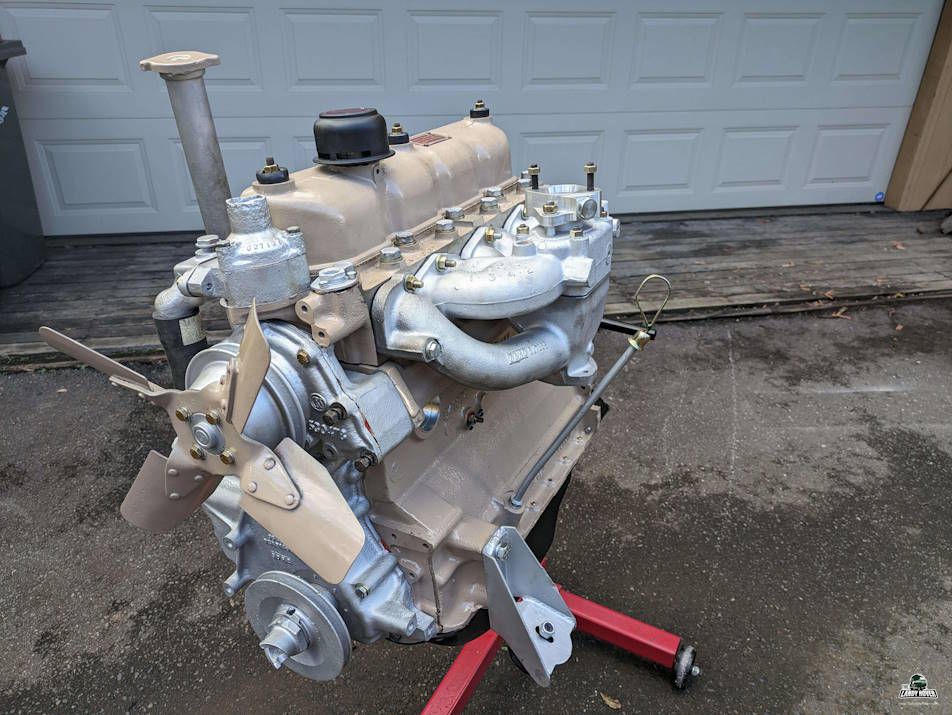
Above – The Engine, once all the decades of sludge had been removed and a full rebuild had been completed.
My search eventually led me to a backyard on the Sunshine Coast, where an old engine block and cylinder head had been sitting exposed to the elements. It looked unpromising, to say the least. The pistons were completely and utterly rusted solid into the bores. Cracking the bottom end open revealed a delightful cocktail of water in the sump, topped with a thick layer of old engine oil, and capped off with multiple years of accumulated, toxic oil slime coating absolutely everything. But beneath that horrific primordial sludge, luck was on my side: resting safely inside that oily life-raft was a perfectly preserved crankshaft.
I hauled my backyard treasure back to the shed, spent a considerable amount of time degreasing the slime, stripped it down to the bare bones, and then tried multiple things that health and safety manuals tell you not to do, to try and get the seized pistons out. After a few days of oil, ATF, acetone and fire, I had to call in a favour from a neighbour who happened to have a heavy-duty hydraulic press. We rigged the block up, pumped the handle, and watched the pressure gauge climb. As it climbed higher and higher, we ran and left the hydraulics to do its thing, hiding behind a work bench and peering over the top. It took an incredible twenty tonnes of pressure before the pistons finally gave up, and one by one, they literally exploded out of the block.
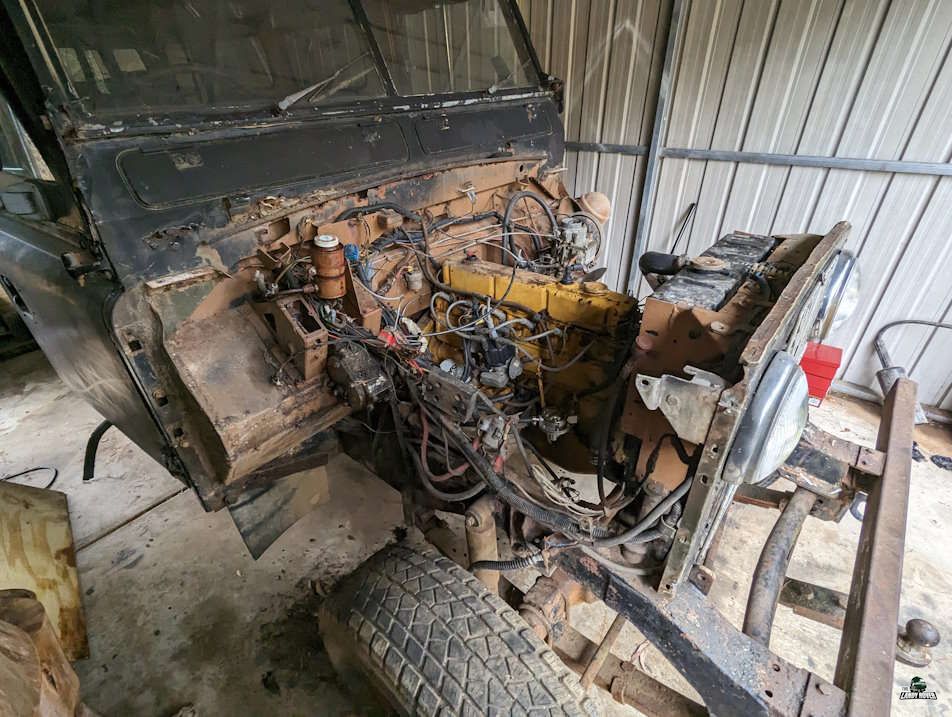
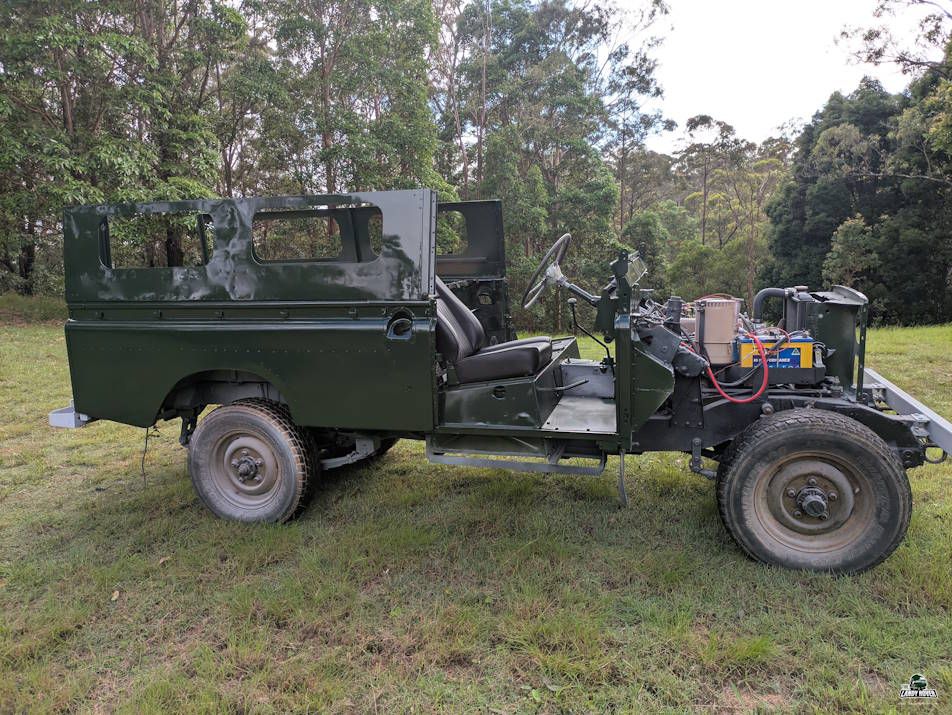
With a freshly built engine waiting on the stand, it was time to turn my attention to the bodywork. The Landy had been subjected to a rather questionable civilian cosmetic choice at some point in its past: someone had coated the entire exterior in thick, drab black paint, completely burying the original green-and-brown military paint underneath. It was time to peel back the decades and find the Landy’s true identity.
What followed was a meticulous, grueling, bare-metal restoration. My postbox quickly became the busiest spot on the street. I was on a first-name basis with the postie, as almost weekly parcels from Paddock Spares arrived from across the globe, filled with the endless brackets, seals, and hardware needed to piece the jigsaw puzzle back together. I also replaced the army style cut out front wheel arches with two that were recovered from a local scrapyard, which needed some serious TLC. The army uniform had finally been removed and she was back into civilian clothes.
Once the metal was completely prepped and clean, it was time for paint. Turning my backyard shed into a makeshift spray booth, I laid down two heavy coats of epoxy primer to seal everything up and protect it from the elements, followed by endless block sanding. Then came the magic moment: the topcoats. I sprayed two coats of classic Deep Bronze Green across the body, watching the vehicle transform from a forgotten paddock wreck back into a proud, dignified machine. To top it all off, the roof was sprayed in traditional Limestone, providing that perfect, iconic British contrast.
It took twelve long months of weekend, public holidays and annual leave, chipping away at it as she finally started to take shape. Finally, the day arrived. The newly built engine was hoisted back into the chassis, and the panels were carefully aligned and bolted back together.
Then came the grand finale: the first startup. If you’re imagining a dramatic, cinematic moment where I turned a key and the engine sang instantly to life, let me shatter that illusion right now. It was a complete anti-climax. After priming the system with fuel, I didn’t even have an ignition switch wired up yet. I had to manually touch two bare wires together to engage the starter motor.
On the third attempt, the starter cranked, the brand-new carburetor let out a weird, unsettling POP, and then—finally, attempt number four, the engine caught, cleared its throat, and purred back to life. After fifteen years of silence under a tree, she was breathing again.
The final hurdle was making her legal to drive again. After a few tentative, nerve-wracking test drives around the block, I admitted defeat on one front and handed her over to a local garage just to get the notoriously stubborn Series brakes properly bled and working. With a firm brake pedal and a passing roadworthy certificate in hand, she was officially registered. Driving her out onto the open road, glossy green paint catching the light, the military veteran finally had her dignity back.
But as we cruised along, enjoying the mechanical symphony of a successful rebuild, a wild idea began to take root. We weren’t just restoring a piece of history to drive to work. We were going to build a home on wheels.
Next Month Paul and Lucy Tells us about getting the Land Rover on the road, and what there crazy plan is!
If you want to know more the Click the links below!
Website: www.thelandyrover.com
Facebook: facebook.com/TheLandyRover