There can be only one
The Highland Forward Control with a significant history.
Words & Pictures – Ian M. Garner
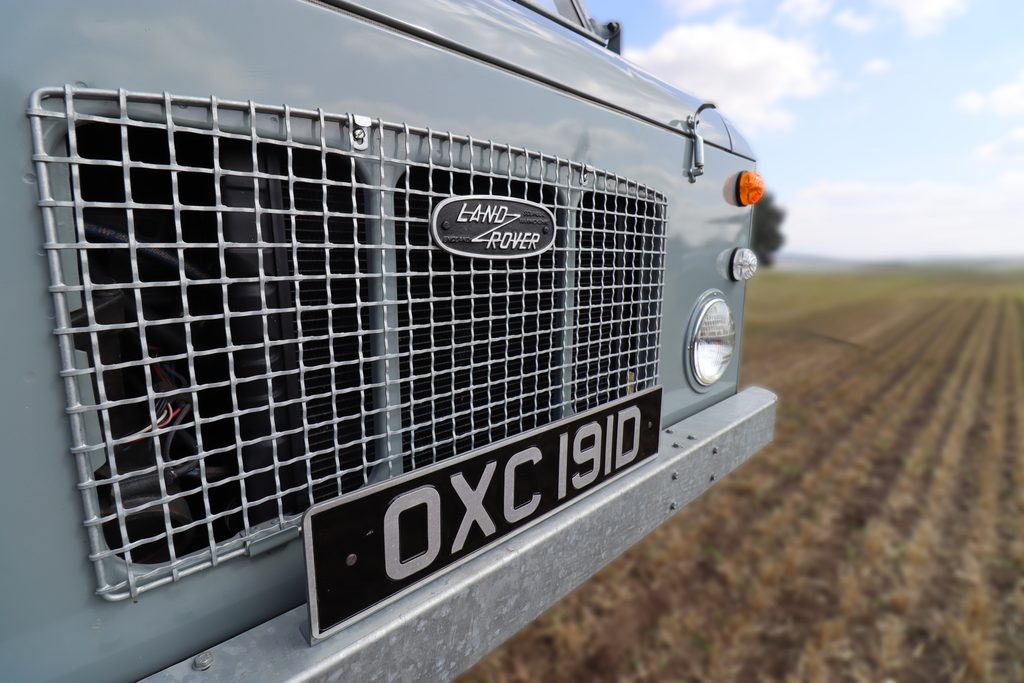
Whilst setting up a club stand for the Series 123 club at this years York Land Rover Show I noted a rather nice looking Forward Control arriving, being towed by a motorhome. I must take a closer look at that I thought to myself as a I pottered on. Maybe 10 minutes later, the show organisers were at the stand asking if we could find room for a rather special Forward Control. Well of course we could, and shortly afterwards I was introduced to Duncan and his wife Sheila and their rather impressive Series 2B Forward Control.
Introduced in 1962, the Forward Control was Land Rovers answer to those customers who wanted an increased payload. With the same basic 109” wheelbase as the standard Land Rover, the cab was positioned above the engine. Initially launched with the 2.25 litre petrol engine, the larger 2.6 litre straight 6 was offered later in 1963. With 9.00 x R16 tyres the Forward Control stood tall making the climb into the cab a bit of a stretch indeed.
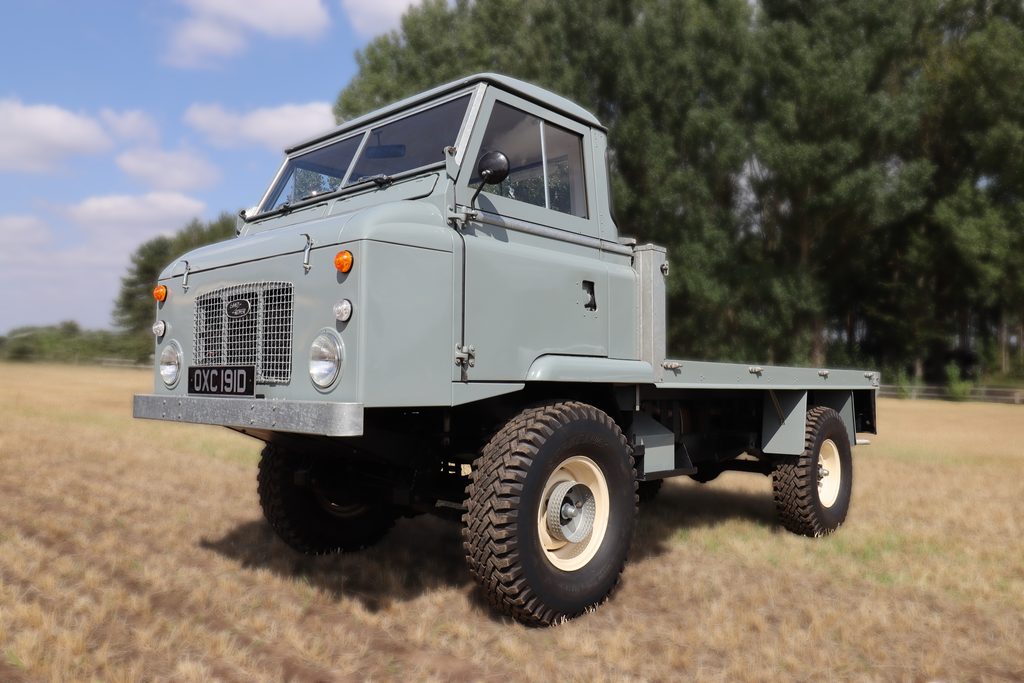
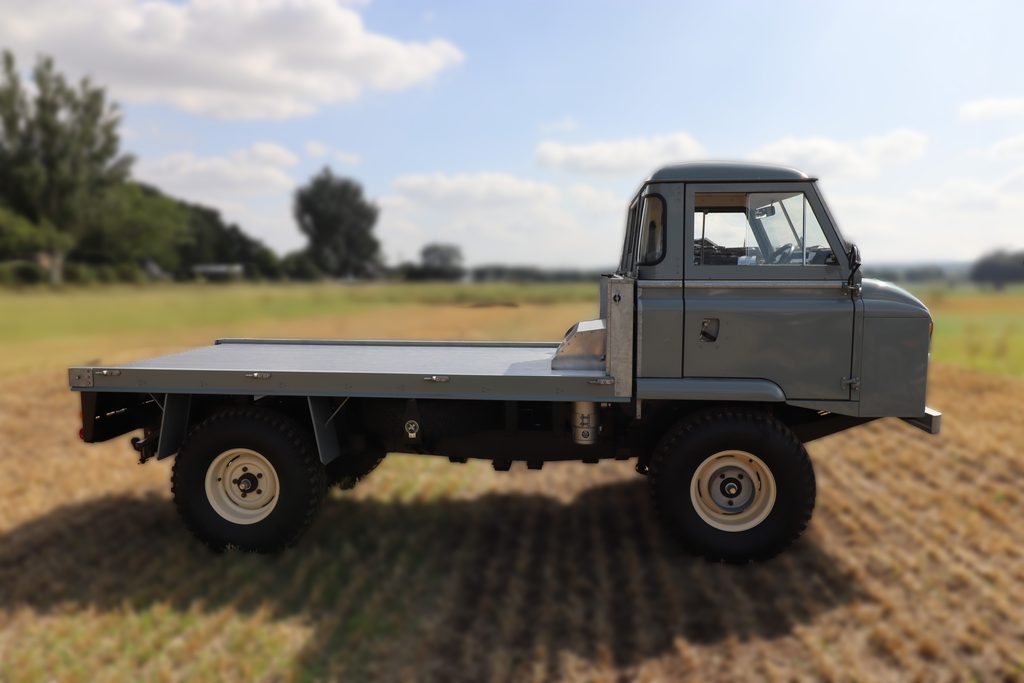
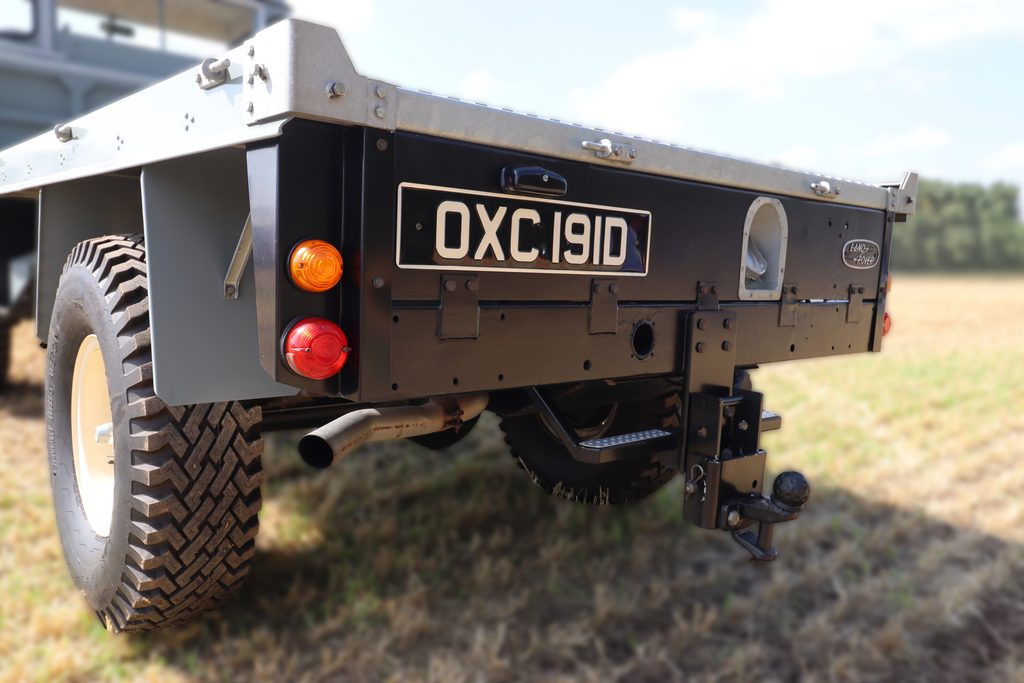
Above & Below – This particular Series 2B 110″ Forward Control had a platform body and looked amazing in the York sunshine.
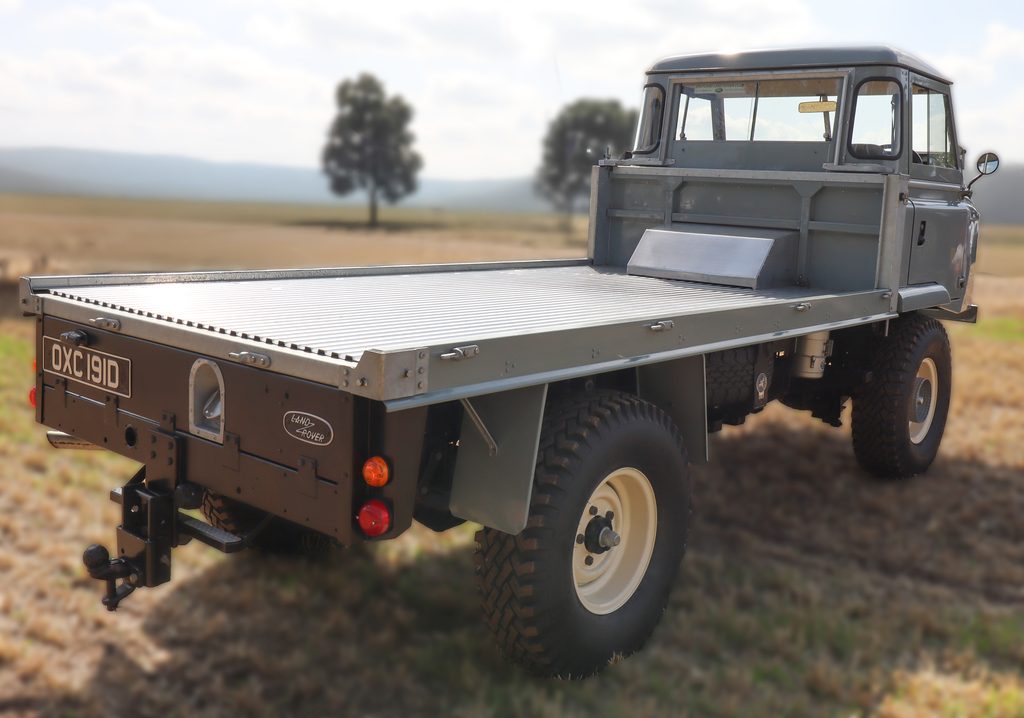
Bodywork wise you got a Land Rover Esque styled cab very similar to the pickup truck cab of a normal control Land Rover. At the rear you could have a bare chassis (with or without an additional sub frame), a flatbed (Called the platform body) or a load bed with or without sides that could be dropped. These were also available with a canvas tilt if needed.
Transmission wise, you got a four-speed manual with synchromesh on 3rd and 4th meaning double de-clutch changes in the lower gears. This was mated to a two-speed transfer box giving high range gears in both rear wheel drive and all wheel drive or a low ratio range in all wheel drive only. Production ran until 1966 when Land Rover introduced the Series 2B 110” Variant.
Styling differences were minor, with the headlights moving to a lower position on at the front. Inside the ergonomics where improved with a change in gear shift position and a longer hand brake lever.
The 110” had a slightly longer wheelbase and a wider track thanks to different axles. Engine and transmission wise it was pretty much as before, but with the addition of a 2.25 litre diesel engine, which is probably the slowest production vehicle Land Rover ever made!
This brings us back to Duncan and his Series 2B. You see, this isn’t just any old Forward Control, its Number 1. The first production 6-cylinder Series 2B made, with the chassis number 33000001A. Now some of you will be thinking, hold on, Chassis Number 1 is at the Dunsfold Museum, and you’ll also be correct. The Dunsfold example is the first Diesel Series 2B made, with a chassis number of 33500001A.
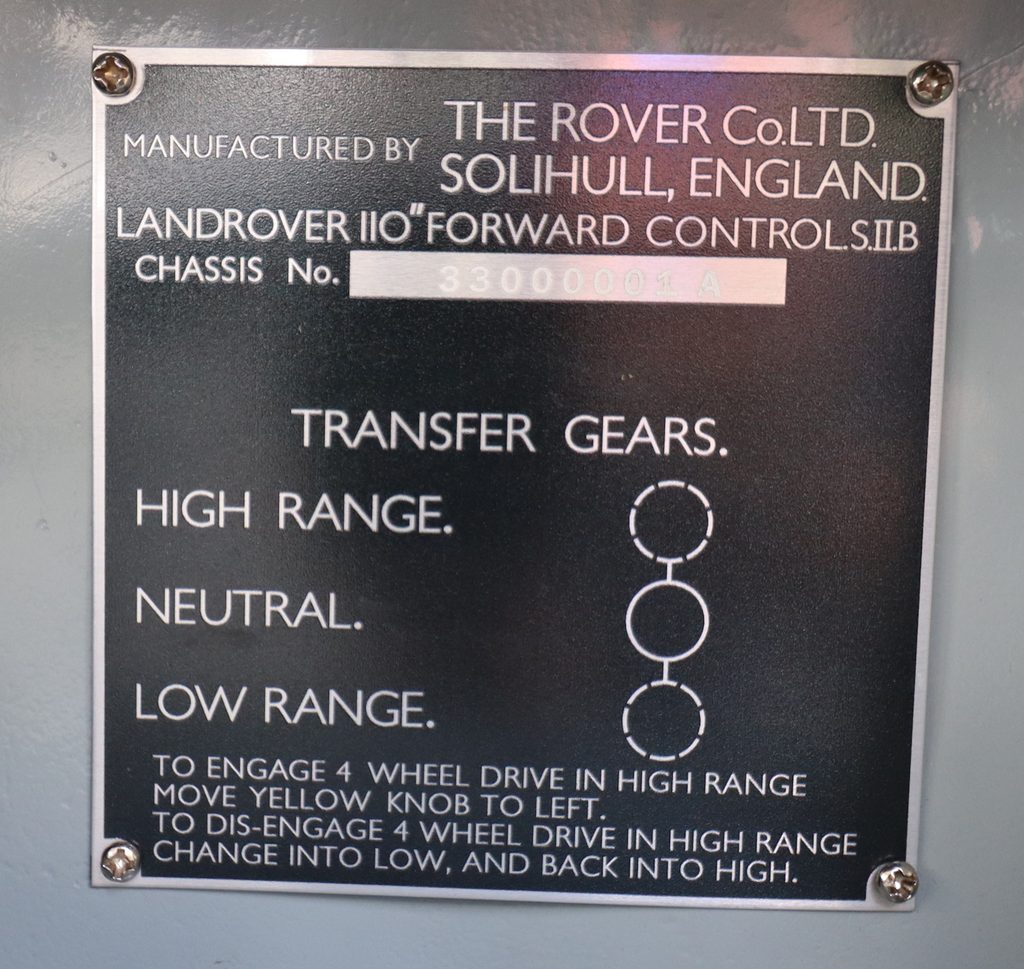
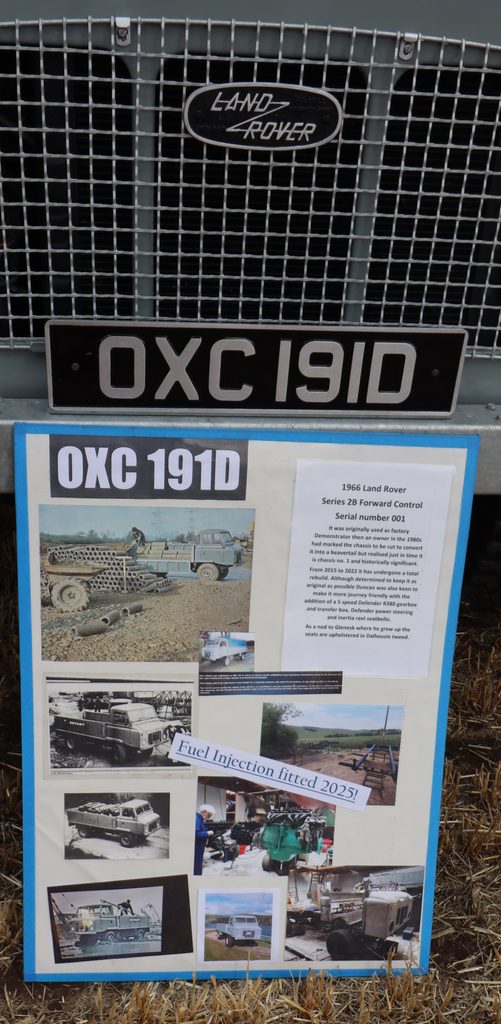
The Forward Control had always held a special place in Duncan’s heart. He used to see one on his way to school and was fascinated by the fact that with the same wheelbase as a standard Land Rover, Land Rover could offer so much more usable space. Roll on to the early 2000’s and Duncan had a chance to buy one of his own. Following up on an advert he saw, he went to see the Land Rover and to his surprise found it was chassis number 1. It hadn’t been advertised as such when he first saw the advert. The previous owner also didn’t quite know what he had when he bought it either. His plan was to cut it up and make a beavertail with it, but before he had made his first cut, he realised the historical significance of it, so put it up for sale.
When he first got it, one of the jobs to do was to replace the cross members. Rot had got hold and they needed to be replaced. Come Duncans retirement, he decided to carry out a ground up rebuild which took between 2015 and 2022. The chassis was blasted and painted and as he started to rebuild it, he decided to move away from standard specification by adding some improvements. His plan was to have a vehicle he could enjoy and use more often.
The old two speed part time all wheel drive transmission went and was replaced by a more modern R380 five speed box and LT230 transfer box, giving 5 speeds and permanent all wheel drive. The next modification was the fitment of power steering. Using a Defender system as his basis, it was a struggle to fit due to the confines of the body, but Duncan managed it without having to resort to cutting or modifying any bodywork.
The engine remained as the original 6-cylinder 2.6 litre petrol engine, but in order to improve its refinement and usability, Duncan fitted a classic fuel injection system. “It used to cut out at junctions, but now it’s a lot smoother” says Duncan.
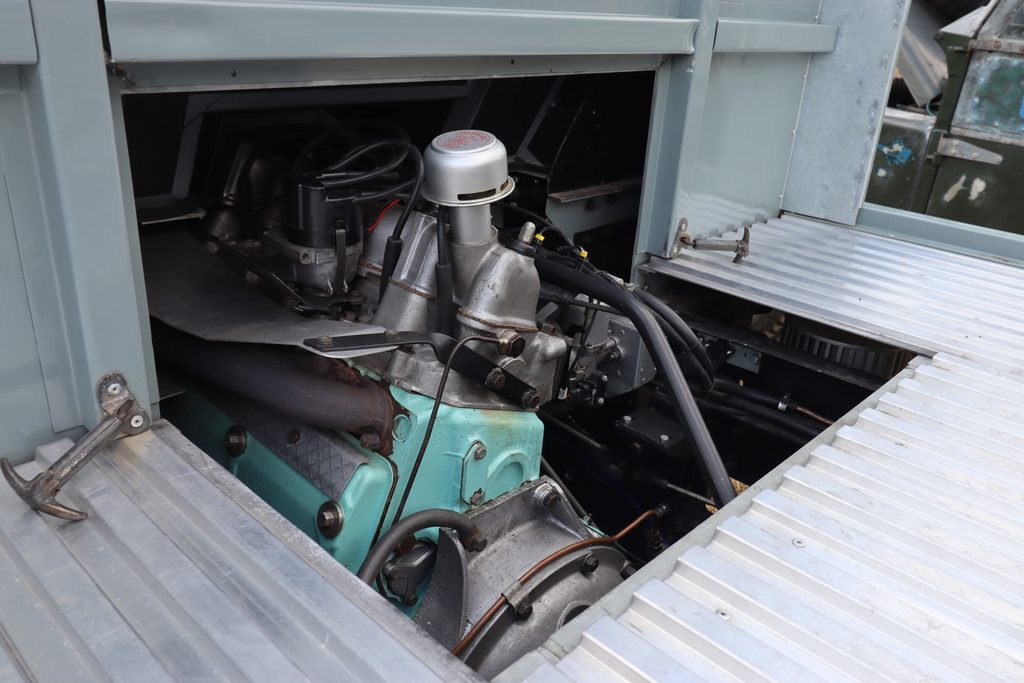
Above left – The rear fuel tank is now an all aluminium replica after the steel original started to leak. Above Right – The 2.6 litre straight 6 runs a lot smoother since the fitment of fuel injection.
The vehicle is immaculate, and from the outside looks standard. This is testament to the time and effort Duncan has put into his pride and joy. One place that isn’t standard however are the seat coverings. They are made from a Dalhousie Tweed that belonged to a local estate, near Glenesk, where Duncans father was a famer, a nice nod to local and family history indeed.
Next on the list maybe a softer set of leaf springs, maybe parabolic. Just to make the right less harsh as this is no show pony. It is used to help move trailers for Duncans son’s trailer business, so it does still work for a living 60 years after it was made. It is also used on hill runs with his local classic car club.
It was a genuine privilege to meet Duncan and Shiela and get to see his amazing Forward Control close up. It is a perfect blend of classic Land Rover, with a hint of modernisation to make it easier to live with day to day. But it wasn’t just myself that thought this was an epic vehicle. The York Show organisers did too, and gave it the Best Vehicle award, and a well-deserved award it was.