Electric Bugaloo
The new of Land Rovers first full EV offerings is so hug we’ve given them a full article!
Words – Ian M. Garner
Pictures – Courtesy of JLR
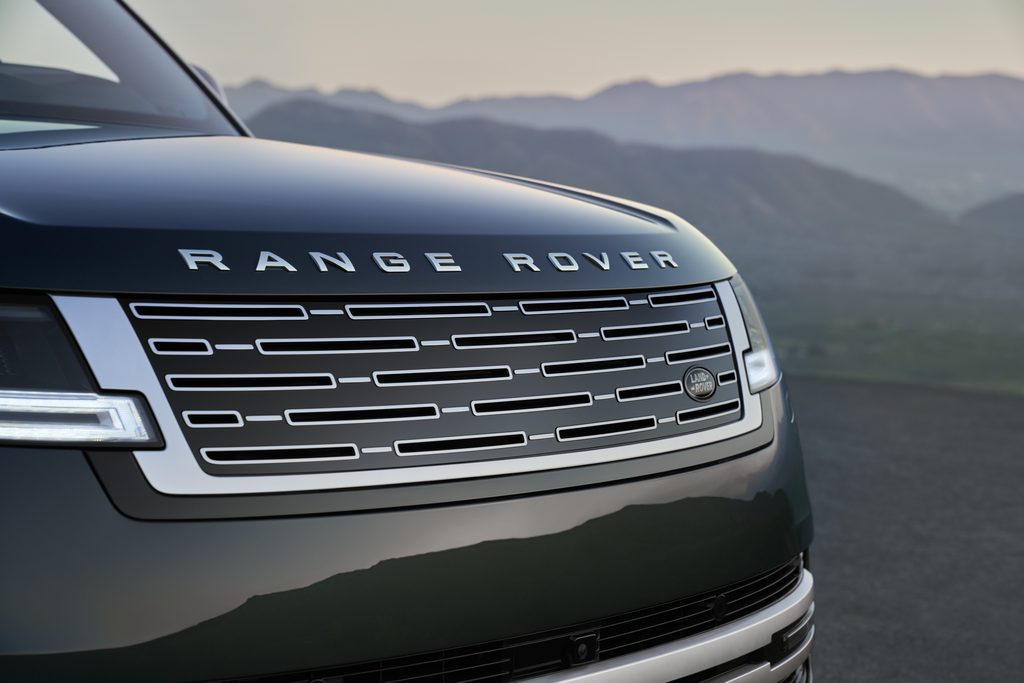
The launch of the all-electric Range Rover and Range Rover Sport is big news. So big in fact we have given them their own full-on article instead of our usual news bite. So here goes. The first press releases on the Range Rover started in April 2024, so it’s been in public development for quite some time. We were teased with pictures and stories of both high and low temperature testing, but then it all went a bit quiet. But now it is back and available to order from your local JLR dealership, so what is it all about.
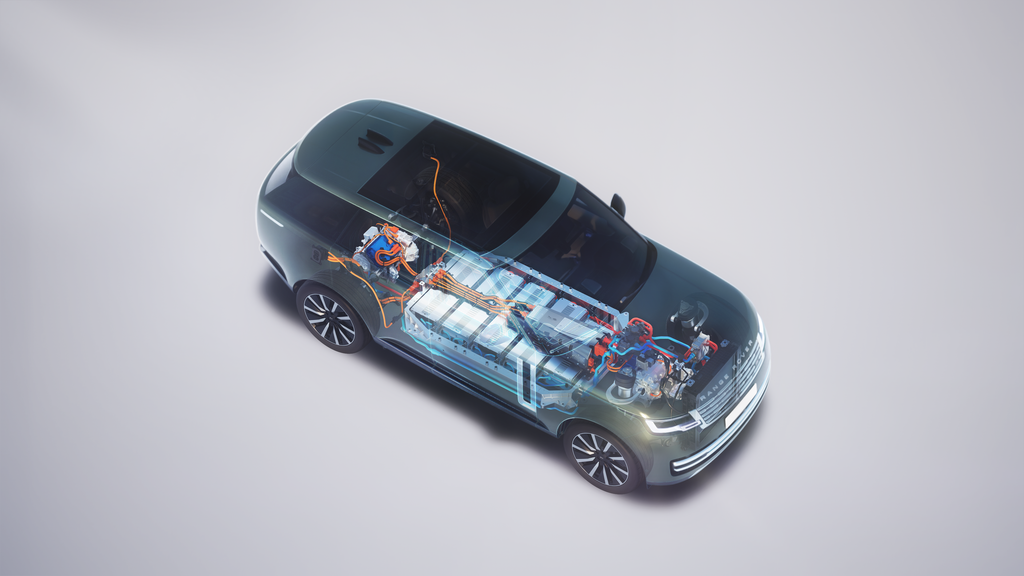
Being a luxury vehicle, silent propulsion is of great benefit, and for the Range Rover this comes in the form of two permanent magnet electric motors, each with 260kW. This equates to either 450 PS or 550 PS depending which version you chose. As with all EV’s torque is immense and the Range Rover EV offers more than any other Range Rover before with 850Nm. This means the Range Rover EV will get to the 60-mph milestone in 4.3 seconds if you go for the 550PS set up. Thanks to the precise torque delivery offered by electric motors, it means the Intelligent Driveline Dynamics can be tuned to offer better performance. The torque to the rear, for example, can go from 100% to 0%. The motor speed can be controlled within 50 milliseconds meaning the Traction Management system can mange any slips and slides up to 100 times quicker than the ICE Range Rovers.
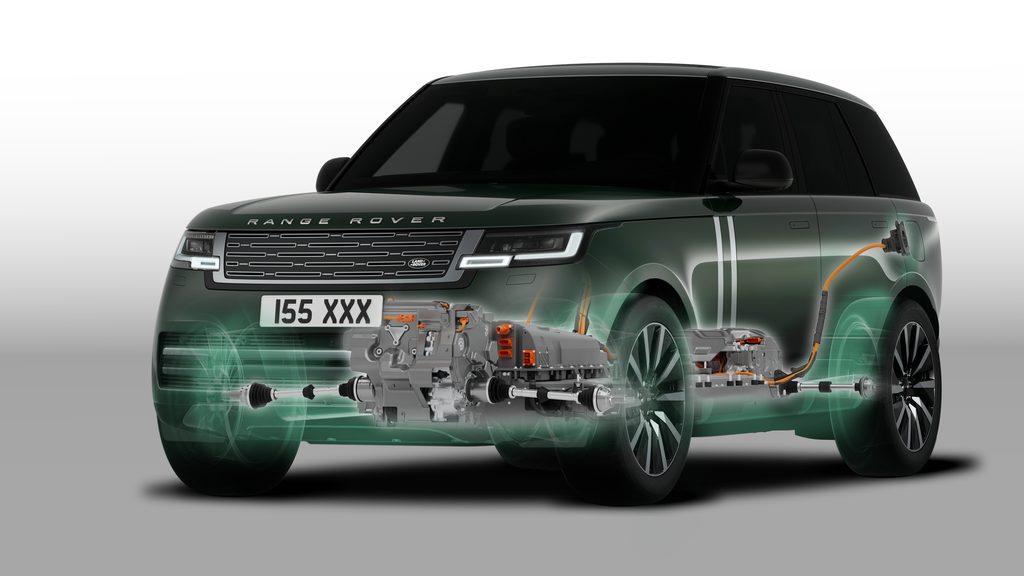
The EV has specially tuned handling and features new “switchable volume air spring” which help with both ride comfort and manage the body roll. The anti-roll bars, damping and air spring rates have all been tuned for the EV as has the as standard rear wheel steer. The dampers are twin valved and are controlled by the Adaptive Dynamics system to maintain a Range Rover level of composure on the road. The navigation system also pre-warns the system of up coming corners to help manage this even better!
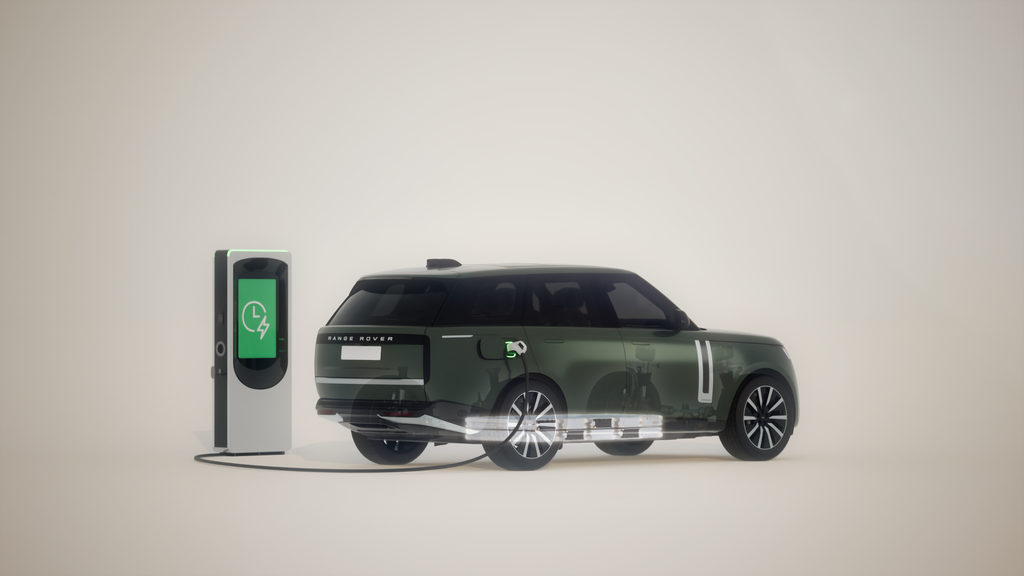
Power comes from a double stacked 118.5 kWh Nickel Manganese Cobalt battery mounted low in the body, meaning a centre of gravity that is 88mm lower than the ICE variant. With the appropriate 350kW rapid DC charging station this can be charged from 10 to 80% in 22 minutes, or you can add 137 miles in 10 minutes. From a full charge the Range Rover Ev offers 372 miles (WLTP – Worldwide Harmonised Light Vehicles Test Procedure). Sophisticated software manages the battery and can isolate any over heating to a single cell. The battery pack is fully sealed so the Range Rover EV can still meet the 900mm wading capacity of its fossil fuelled siblings. There is still a certain amount of nervousness about EV’s so the EV system in the Range Rover comes with an 8 year or 100,000 warranty.
One of the technical challenges faced by Engineers when developing an EV is heat management and to combat this JLR has developed, ThermAssistTM . This new technology manages the charging and battery performance in extreme temperatures and reduced the heating energy by 40%. Excess heat is collected by a heat pump and reused to heat either the interior or the battery in cold temperatures.
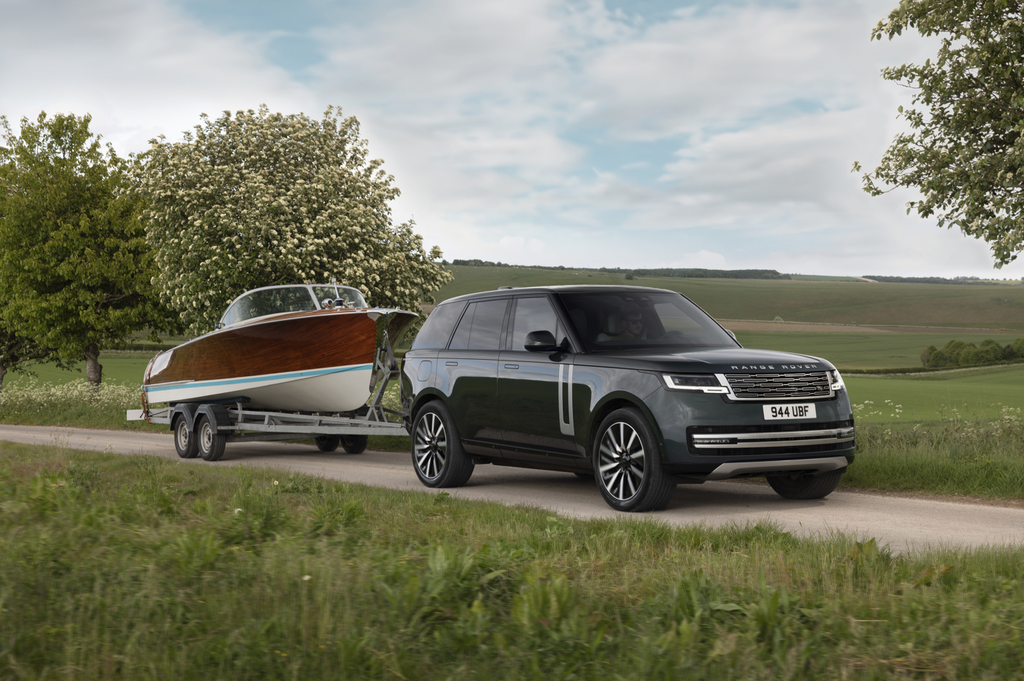
Being an EV, the maximum towing capacity has reduced from 3,500 kg of the ICE variants to 2,500 kg, and I would suspect towing this weight will dramatically reduce range, as it does in an ICE vehicle. However, to help the driver manage this, the Pivi Pro system has a towing range prediction function. By selecting the most appropriate option on what you are towing, the system will advise the expected range.
In addition to charging, the EV can regenerate energy when braking for example. New to Land Rover products is the single pedal driving. This option allows the vehicle to be driven with just the accelerator. Lifting the pedal will slow the vehicle (up to 0.2g of regenerated energy) and can bring the vehicle to a complete stop without the use of the brakes. This gives a whole new level of vehicle control on demanding or difficult terrain.
As with all Land Rover products, terrain response is standard and the EV is no different. The system offers 5 pre-determined settings for Wading, Sand, Rock Crawl, Mud & Ruts and Grass / Gravel / Snow, but where this system differs is there is no low range to select. Thanks to the high torque available at low revs there is now no need. The system is called “Virtual” All wheel drive, with electronics replacing the traditional mechanical driveline. Hill starts can be completed on 1 in 3 hills and 1 in 1 hills can be climbed with a rolling start. The Ev Range Rover offers 265 mm of ground clearance in its standard off road height.
Trim wise, you get a lot of choice with SE, HSE, Autobiography and SV versions, and you can have your EV in either short wheelbase or long wheelbase formats. If you wish to specify your Range Rover more exclusively then the Range Rover Bespoke commissioning service is for you.
The Range Rover EV is manufactured in Solihull, with the EV powertrain & battery packs being made in the engine facility (Now called the Electric Propulsion Manufacturing Centre) in Wolverhampton.
Shortly after the launch of the Range Rover EV, the Range Rover Sport EV was announced. The basic specifications are the same as those above for the Range Rover EV, but being the sport handling is tuned for performance rather than composure. The power options are the same at 550PS and 450PS, with the 450PS hitting the 60-mph target in 5.4 seconds, which is still rapid.
The handling is managed via two different systems working in harmony, these being the Dynamic Air Suspension and Adaptive Dynamics 2. As with the Range Rover you get switchable volume air spring with dual adaptable air chambers. As you corner the internal pressure increased maintaining a flatter cornering experience. The dampers are twin valve monotube and control the pitch and roll of the vehicle by reacting within 12 milliseconds to any changes.
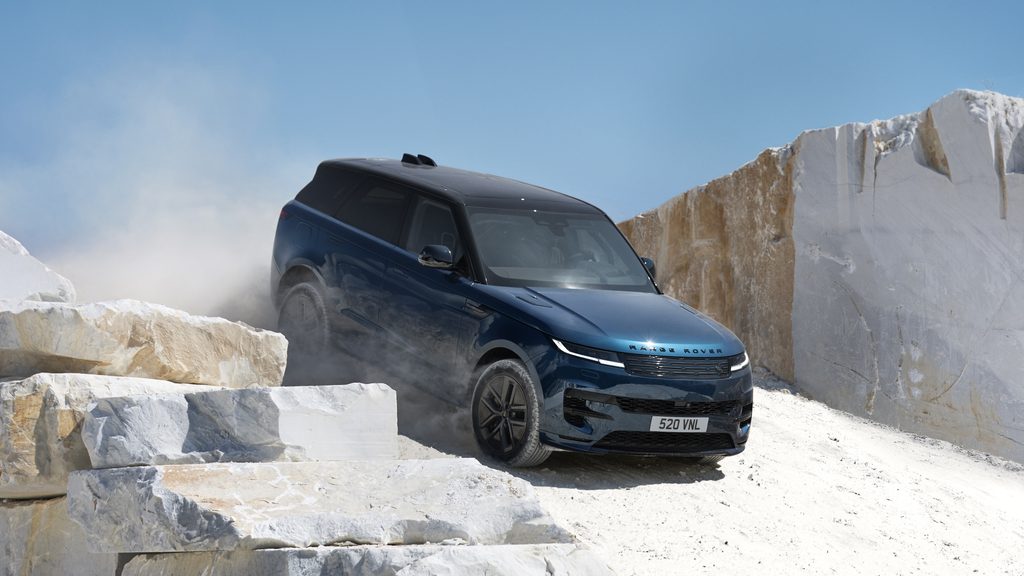
Dynamic Response Pro gives another level to the handling however and comes as standard on the EV550. This features a 48v electronic active roll control system which can provide up to 1,400Nm of torque to control roll in corners. The system can react every 10 milliseconds and can reduce body roll by 2.8 degrees per G, with the stiffer anti roll bars reducing this by a further 4 degrees per G. Once off road these ant-roll bars decouple to allow an increase in wheel articulation.
To give the Sport the driving experience owners expect, Dynamic Mode is available which ramps up the torque 50% faster than the Range Rover EV and features a Dynamic Launch Mode for maximum thrust in a straight line.
The Range Rover Sport EV has three differing trim levels, with Dynamic SE, Dynamic HSE and Autobiography. For the first year only a First Edition will also be available.
It will be interesting to see how the Range Rover and Range Rover Sport EV’s fair. Neither are cheap with the Range Rover Sport starting around £110K and the Range Rover starting at around £150K. It will also be interesting to see what the next JLP EV will be.