100% Awesome
In part one of our new series, The best Land Rovers never made, we take a look at the 100″ Coil Sprung Land Rover.
Words & Pictures – Ian M. Garner
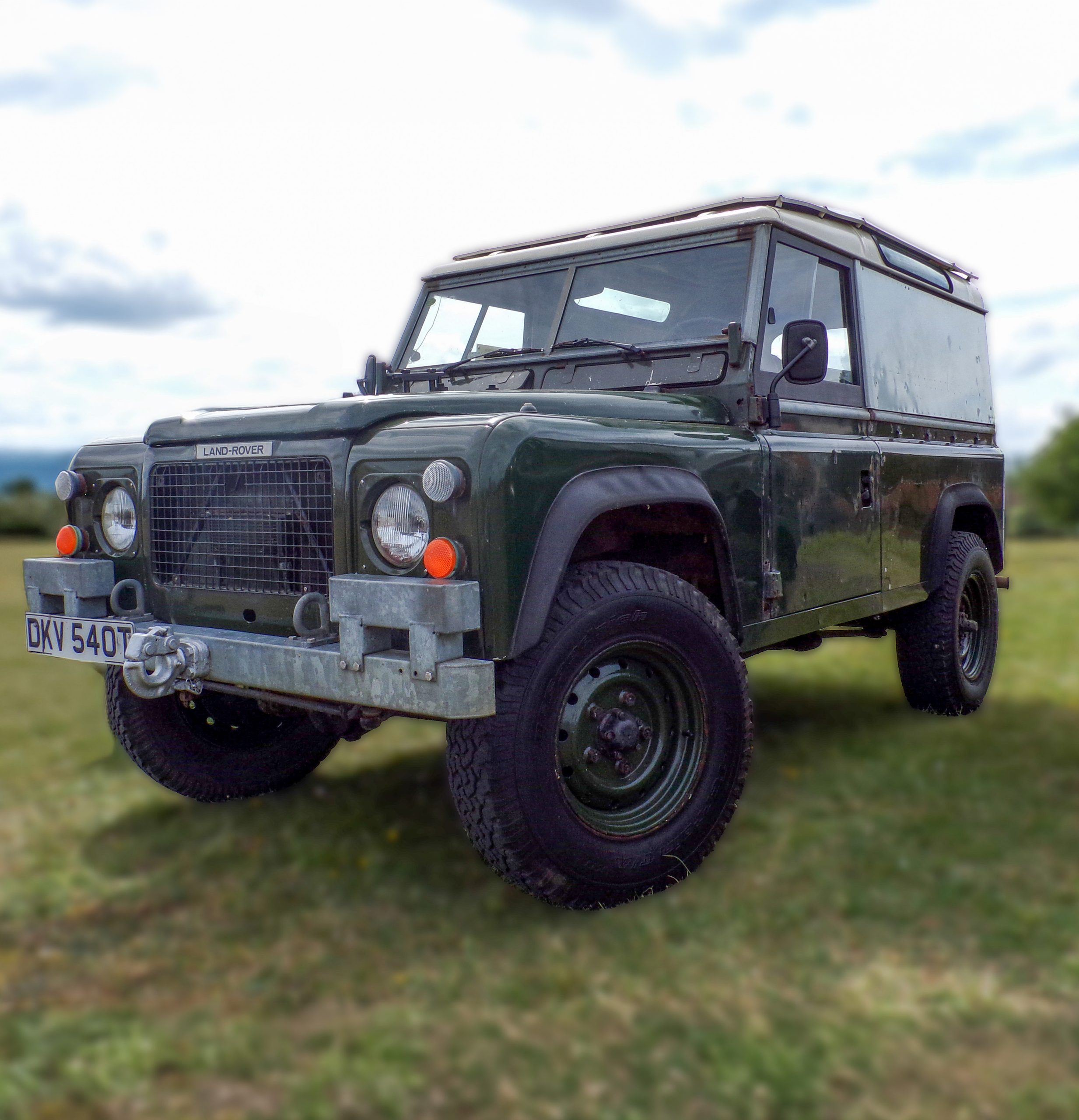
In this series of articles we take a look at some of the prototype Land Rovers than never made it into production. To start off the series, we take a look at the 100” Prototypes that were developed in the late 1970’s.
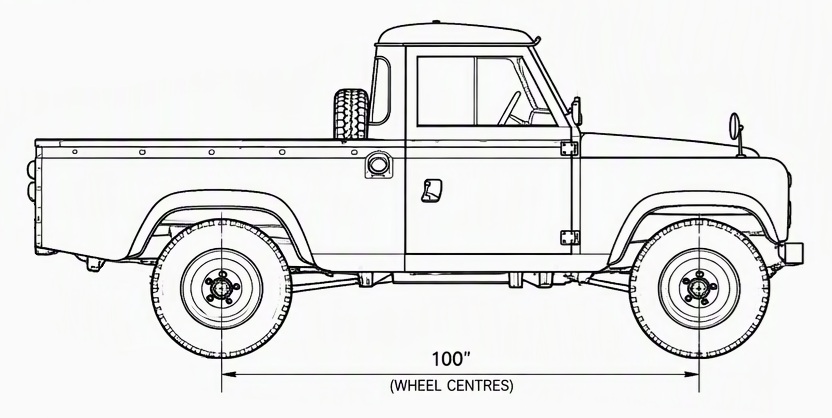
After the Range Rover was introduced, with its comfortable, long travel coil suspension it seemed only natural that this technology would eventually appear in the Land Rover, however. There was internal opposition to such a move, the leaf sprung suspension of the series Land Rovers was harsh, meaning drivers generally took things steady off road. If a more comfortable ride was made available, then the vehicles would be driven faster with greater risk of damaging the vehicle. This argument never got any real traction and so the coil sprung Land Rover was born, and in 1976 work on the Stage 2 started.
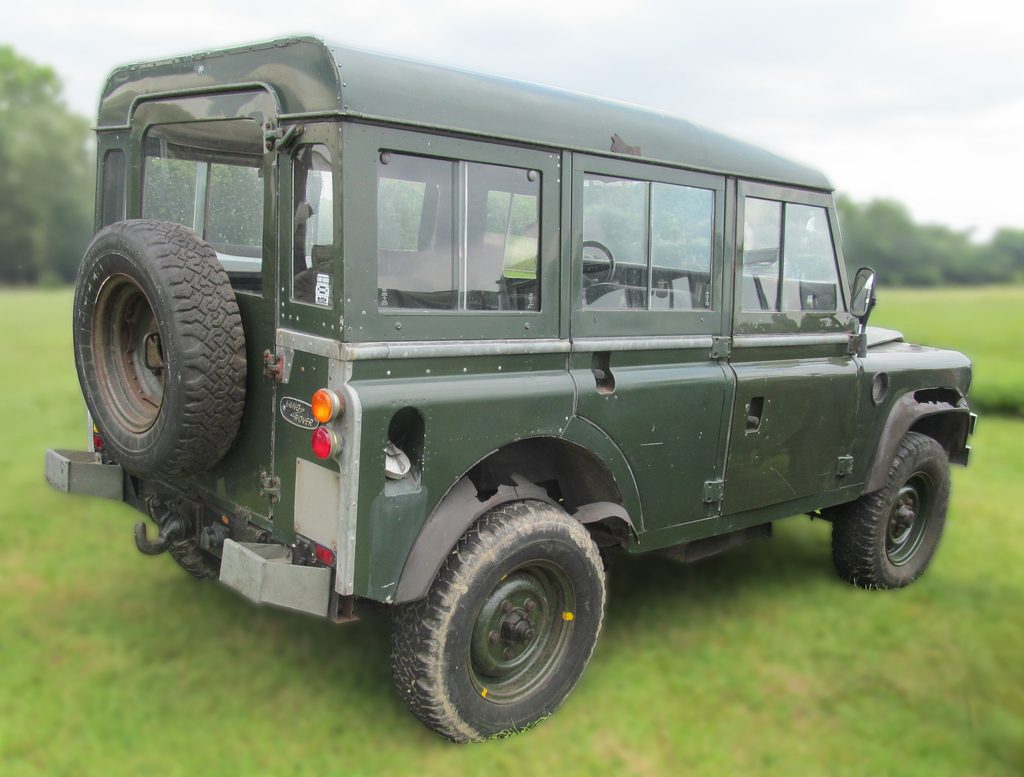
Initially four prototypes were given the green light, with both short and long wheelbases being produced. There was also an intermediate wheelbase of 100”, which matched that of the Range Rover. The short wheelbase was to be 90”, and the long wheelbase was to be 110”, with one of each being made. The remaining 2 prototypes were 100”, with one being a 4-door variant to check the feasibility of such a configuration. For the sake of this article, we will focus on the 100” versions. The Station wagon had a soft top and was fitted with the V8 engine and transmission from the Range Rover. The second prototype had the 2.25 litre petrol engine from the Series 3, but had an unusual transmission set up with the gearbox and engine connected via a prop shaft.
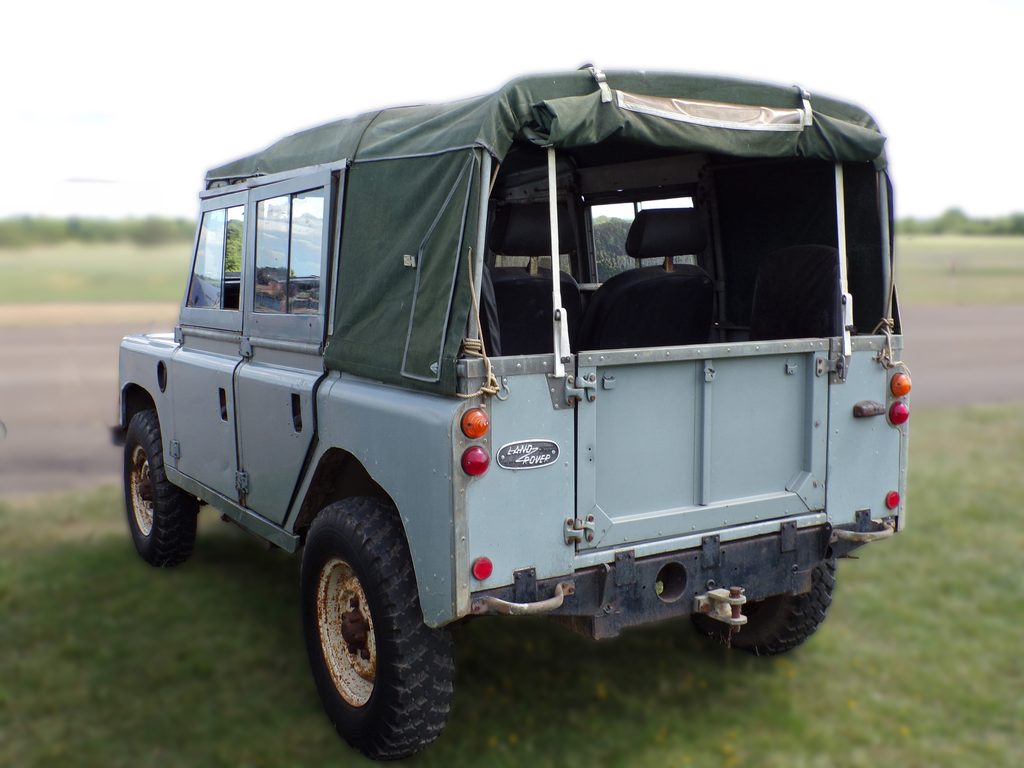
Above – This example is one of the first four Prototype Coil Sprung Land Rovers and is 100″. The four door body work was chosen to check the feasibility of a Station Wagon version with the 100″ wheelbase. This is the oldest surviving Coil Sprung Prototype and is now part of the Dunsfold Collection.
The body work of these prototypes was based on the Series 3, meaning a lot of cutting and fabrication was needed to fit the 100” wheelbase. The front panels were the same used on the Stage 1 V8, with the flatter front and longer bonnet. The axles of the Range Rover were wider than the Series 3 body, so to solve this problem wheel arch extensions were added. During this stage 2 development phase Land Rover were also bidding for a number of military contracts for the French and the Swiss, and the 100” was the primary vehicle chosen for the bid. This meant that even though Land Rover would settle on the 90” (92.9”) and 110” wheelbases for production, development continued on the 100” into the early 1980’s.
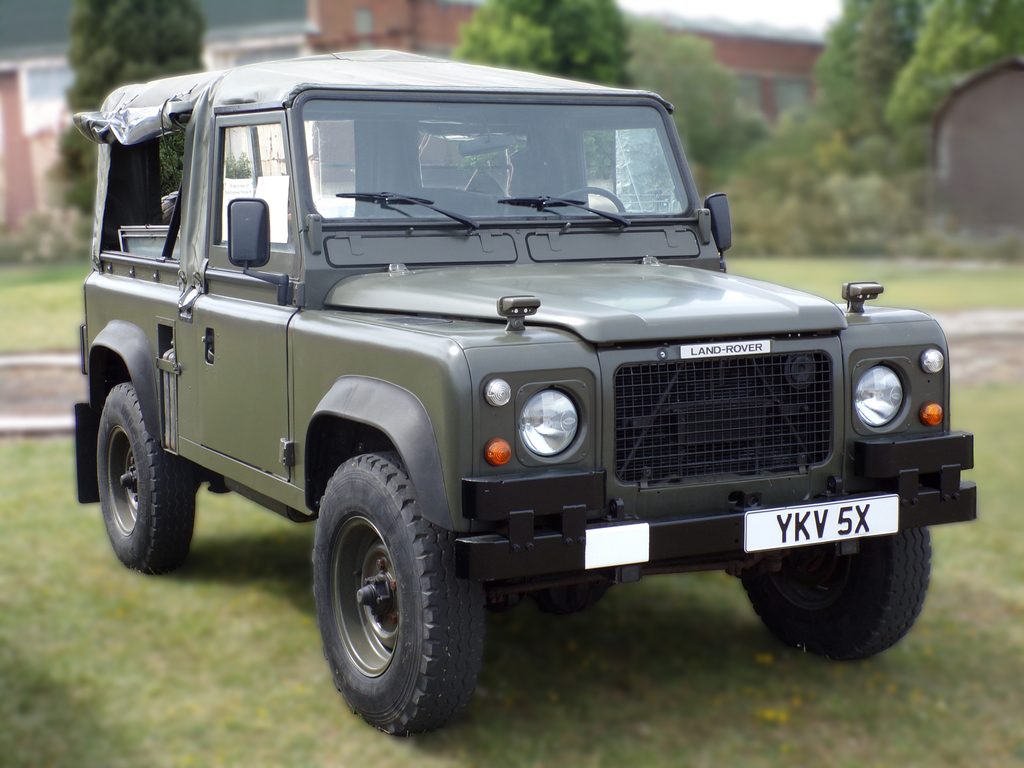
Below Left – This Four door soft top was produced as part of a Swiss Military tender, and featured the 2.25 litre petrol engine mated with a five speed manual with permanent four wheel drive. Below Right – Again, built for the Swiss military, this is a hard top station wagon. Under the bonnet is the same 2.25 litre petrol engine as its cousin, but this time mated to a 3 speed automatic gearbox.
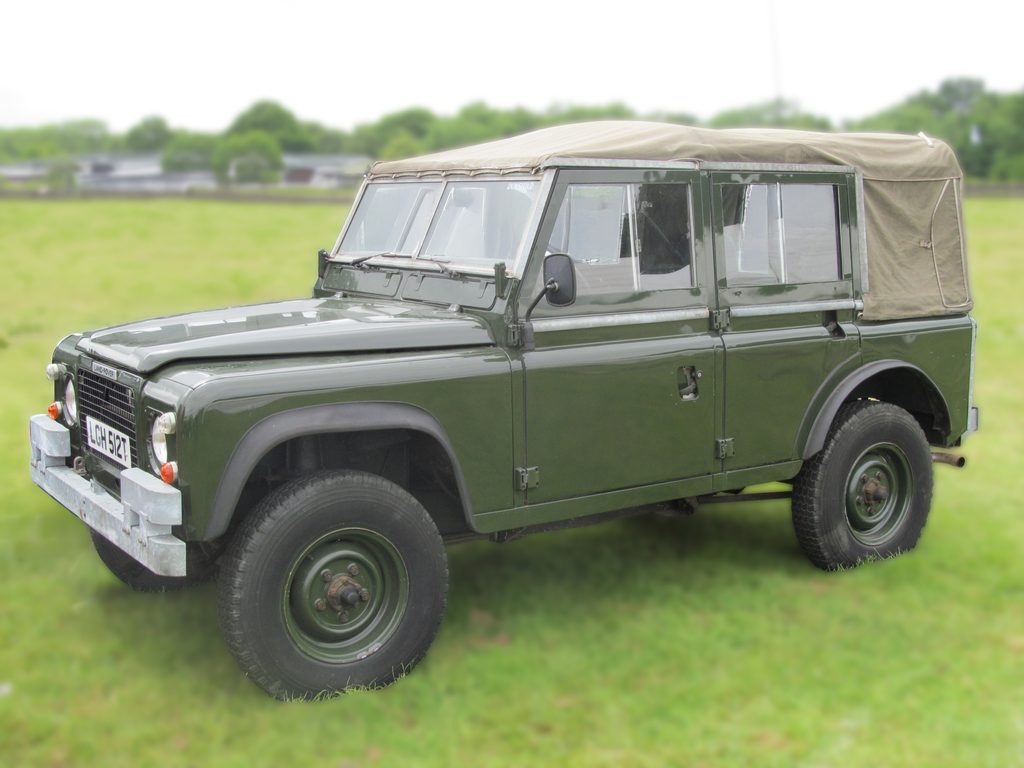
During this time differing engines and transmissions were used. The V8 and LT95 gearbox was used in many versions, however the 2.25 litre petrol engine was also used both with a 5-speed manual and a 3-speed automatic. Later versions also had a 2.5 litre diesel engine that was introduced with the 110. Body style wise, Hard Tops, Pick-ups, Soft Tops and Station wagons were all produced. The rear hangover was shorter than that of the Range Rover, so the fuel tanks were Land Rover items located under the front seats.
It was a shame that the 100” never made it into production, as many say it was the ideal wheelbase. Many of the military prototypes still exist in the hand of the Dunsfold Collection or private collectors. In the 1980’s many people bought old rusty Range Rovers and fitted then with Series 3 bodywork themselves, so it is not uncommon to see one out and about.
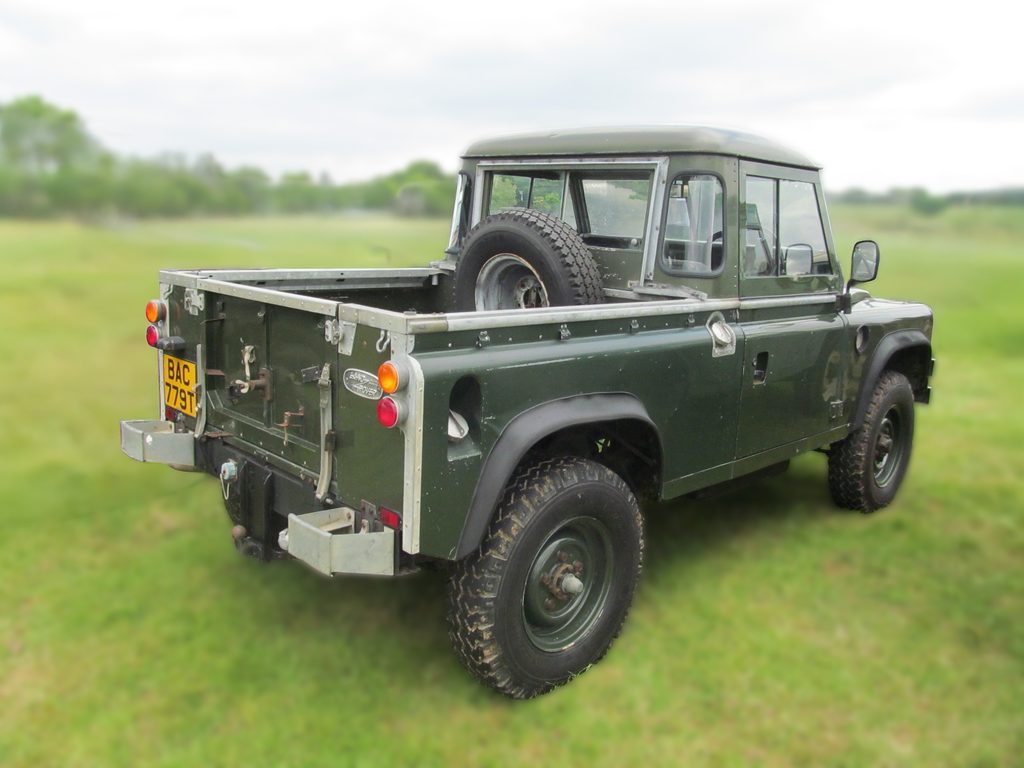
Above – One of the later examples, the body work is now more like the OneTen and Ninety’s rather than the Series 3 style of earlier. Below – The Military bumpers front and rear show exactly what market Land Rover had in mind.
So, what is a 100” Land Rover like to drive? Well, when fitted with a V8 engine it has enough power to keep up with modern traffic and thanks to disc brake all round it stops well too. The body does lean more in corners that the equivalent Series 3, but the ride isn’t as bouncy or harsh. The other good thing about owning and driving a 100” Land Rover is that it confuses most people that see it! My own example, Eeyore, was built as a project vehicle for Classic Land Rover magazine. It was a homage to the grey prototype that still exists in the Dunsfold collection and is a joy to own. As I wrote in the very first issue of www.LRLIFE.co.uk I have always had a soft spot for a 100” Land Rover, and to finally get one of my own was indeed a privilege.
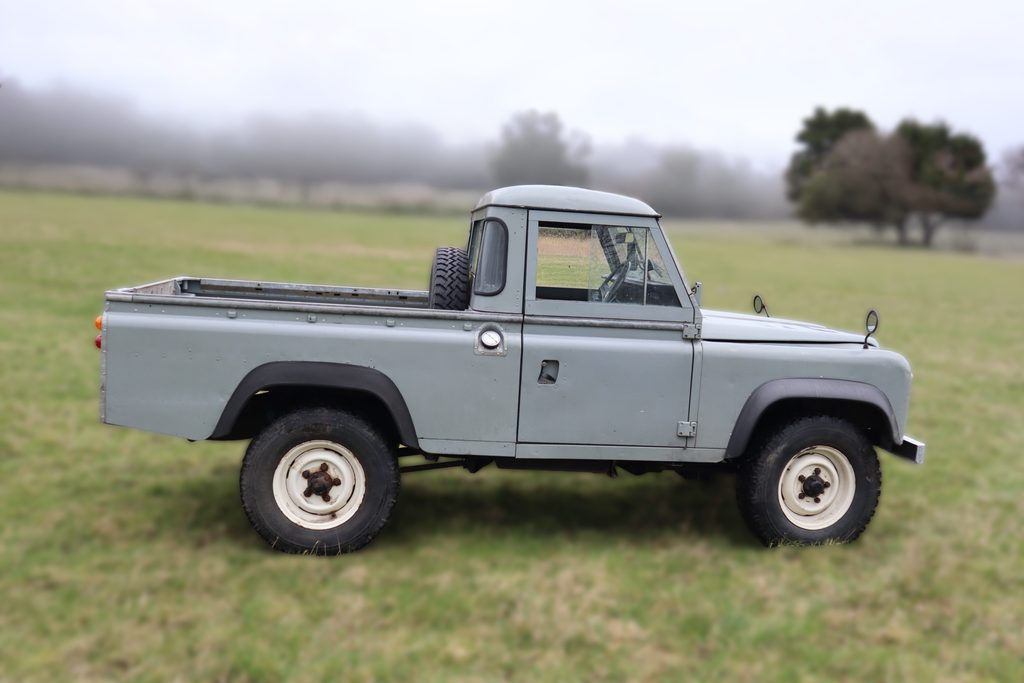
Above – Whilst not a factory built 100″ Land Rover, Eeyore was built to pay homage to them as part of a series of magazine articles.
So, the 100” Land Rover is now part of Land Rovers history, the Military contracts never took the 100” so other than a hand full of samples, no more were made. If you do get chance to see one, take some time to look it over. There are all unique and have lots of charm, but be careful, you might just end up wanting one.