
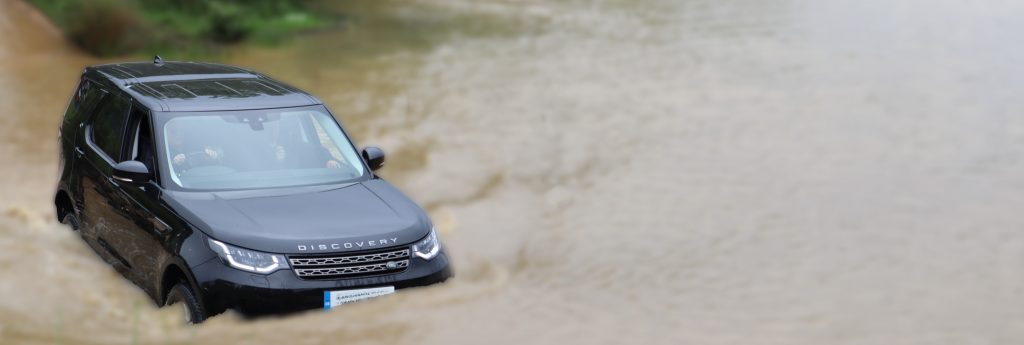
A Decade of Discovery
In September the current Discovery turns 10.
LRLife take a closer look at the Family Land Rover.
Words – Ian M. Garner & David Cook
Pictures – Ian M. Garner, David Cook and JLR
Launched back in 1989, the Discovery was the third vehicle to be added to the Land Rover portfolio. Introduced to sit between the Defender and the Range Rover the Discovery was Land Rovers answer to the ever-growing influx of Japanese SUVs. It was very successful and has since spawned 5 generations.
Land Rover hinted at the design language of the Discovery 5 (Now just called Discovery) when they introduced the Vision Concept in 2014. It was less boxy that the previous iterations, with a modern look that focused on interior space. Design cues from its lineage were still evident with the stepped roof and alpine windows. The most noteworthy feature, however, were the rear suicide doors giving a pillarless entrance and exit for the side doors.
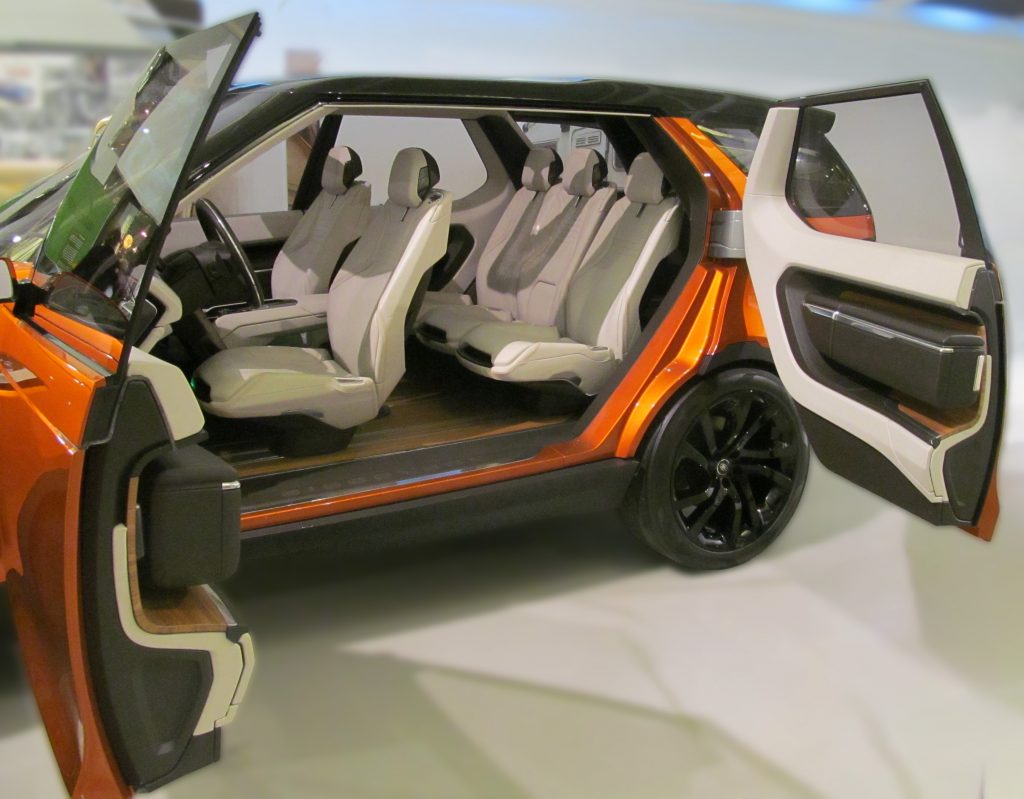
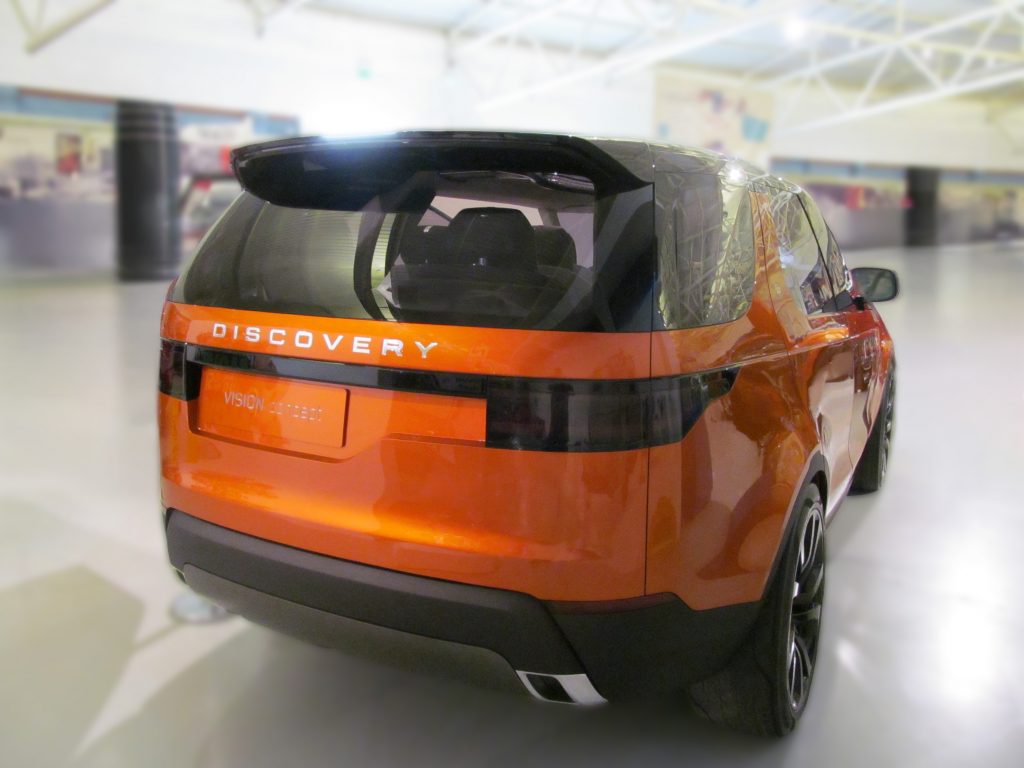
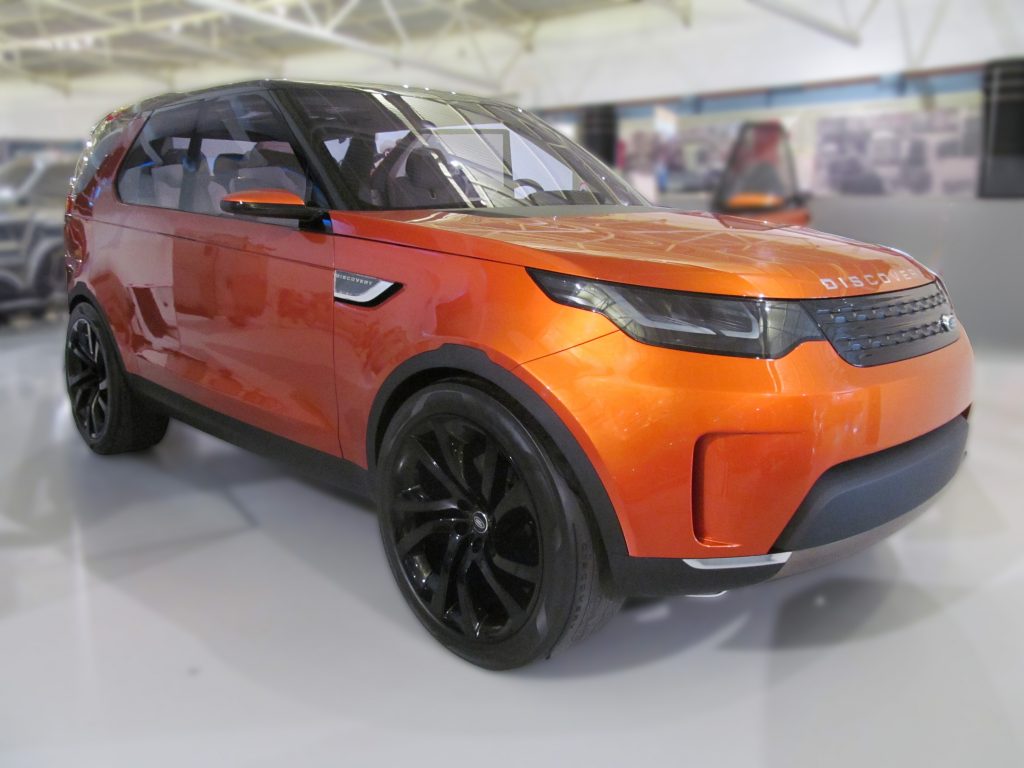
Above – The Vision Concept was introduced in 2014. The styling was close to the finished product but disappointingly the suicide rear doors didn’t make production.
Practicality was always key to the Discovery’s appeal, and the Vision Concept could be configured to give differing seating options, from a full seven-seater to a luxury four seat limousine.
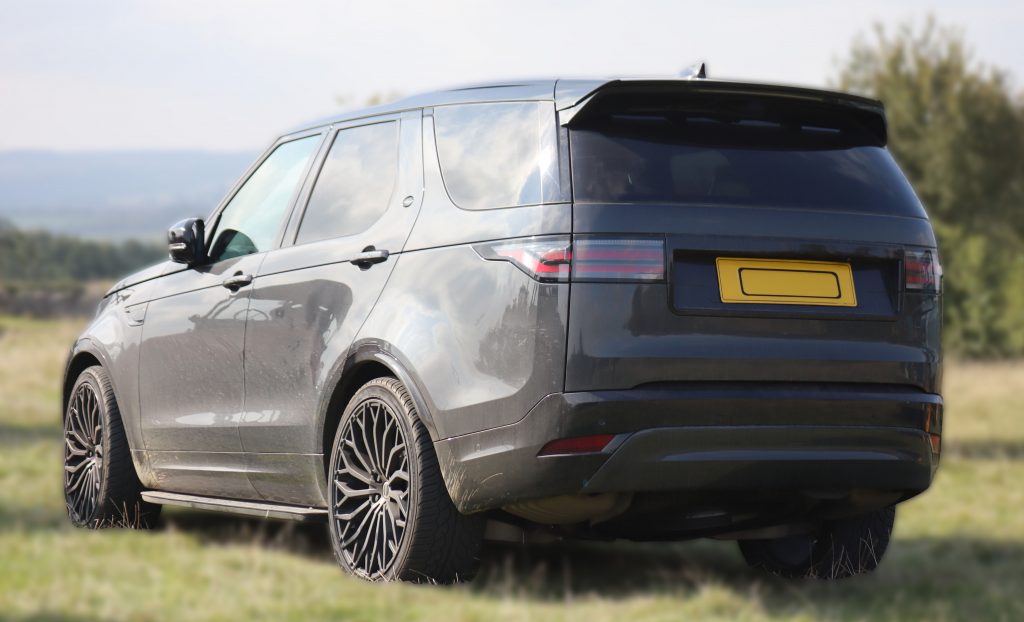
It would be over 2 years for the Vision Concept to become a production reality. Launched in September 2016, the Discovery was introduced to the world parked on a record-breaking Lego structure replica of Tower Bridge. The vehicle was true to the Vision Concept, but those rear suicide doors had been replaced by something more conventional. One design feature that did make it from the concept to production was the off set rear number plate. It didn’t look too bad on the concept, but once in production this feature certainly divided opinion.
Right – The off set number plate certainly was an acquired taste with some owners electing to use aftermarket solutions to have the number plate places centrally.
Keeping its place below the Range Rover, the Discovery was firmly aimed at the adventurous family market with an on the road price of just under £44,000. Its unique selling point was the configurable interior seating, which could be set using an app on your smartphone. The Discovery offered a huge 2,500 litres of luggage space and to keep the family devices charged up to 9 different USB points were dotted around the interior.
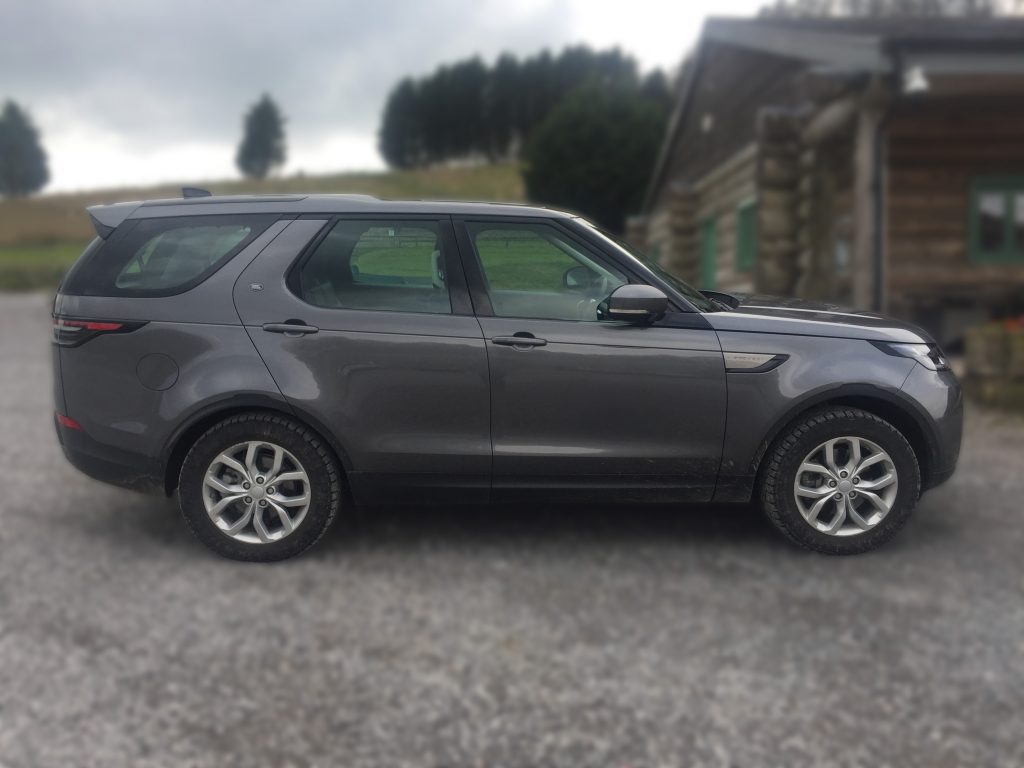
Above – The Discovery was a large vehicle indeed with full size seating for up to 5 adults.
In the engine department, four different options were available. The 2-litre Turbo Diesel Ingenium Engine could be had in either 180 PS Td4 or 240 PS Sd4 tune. A Td6 Turbo diesel V6 was also available with 258 PS and the top of the range was the Si6 giving 340 PS from a supercharged 3 litre V6. All engines were mated to an 8-speed automatic giving drive to all four wheels via one of two differing options. Firstly, there was the tradition high and low ratio transfer box that had featured in all Discovery’s since launch. The second option was a single speed transfer box with a Torsen Differential that could split the torque between the front and rear axles as required. Both of these options could be mated to the latest iteration of off-road software, called Terrain Response 2. This could change key variables such as throttle response and wheel spin to give the best set up for the terrain you were tackling.
The air suspension system had multiple heights available and could be raised by 75mm to increase the available ground clearance. For fast driving the standard height would reduce by 13 mm to improve handling and efficiency.
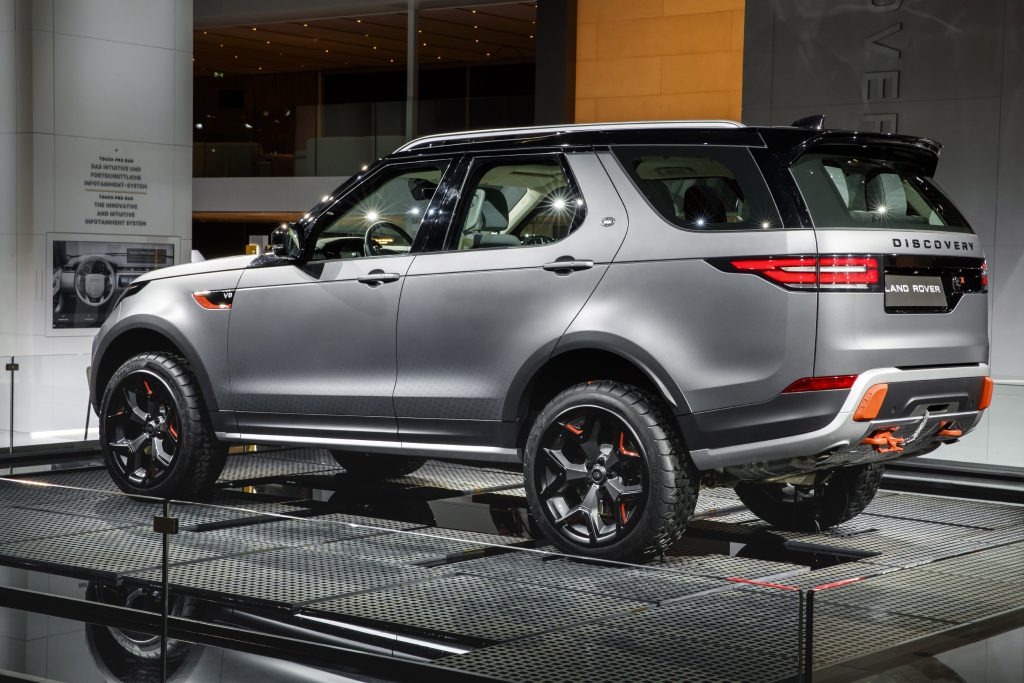
A year after the launch Land Rover teased us with perhaps the most desirable Discover ever. Call the Discovery SVX, it featured a 525 PS Supercharge V8 petrol engine, increased ground clearance with both body and suspension lifts, increased wheel articulation and larger all terrain tyres. The plan was to hand assemble the SVX at the SVO technical centre, with production starting in 2018. However, due to a number of reasons, Land Rover never put it into production, and the concept vehicle remained a one off.
Below – The Discovery SVX looked amazing, but sadly never made it into production (Picture Courtesy of JLR)
2019 saw Land Rover celebrate 30 years of the Discovery with a Anniversary edition. With 22” wheels, panoramic roof and privacy glass, this edition rocked a 380W sound system. Limited to just 400 examples, the Anniversary edition could be had in Black, Grey, Blue or Silver. 2019 also saw a change in the engine line up. Gone were the 180PS Ingenium Turbo Diesel and the P340 V6 petrol engines. The Td6 was replaced by the SDV6 which took the power up to 306 PS. A new four-cylinder petrol engine called the Si4 was introduced though, and this gave 300 PS.
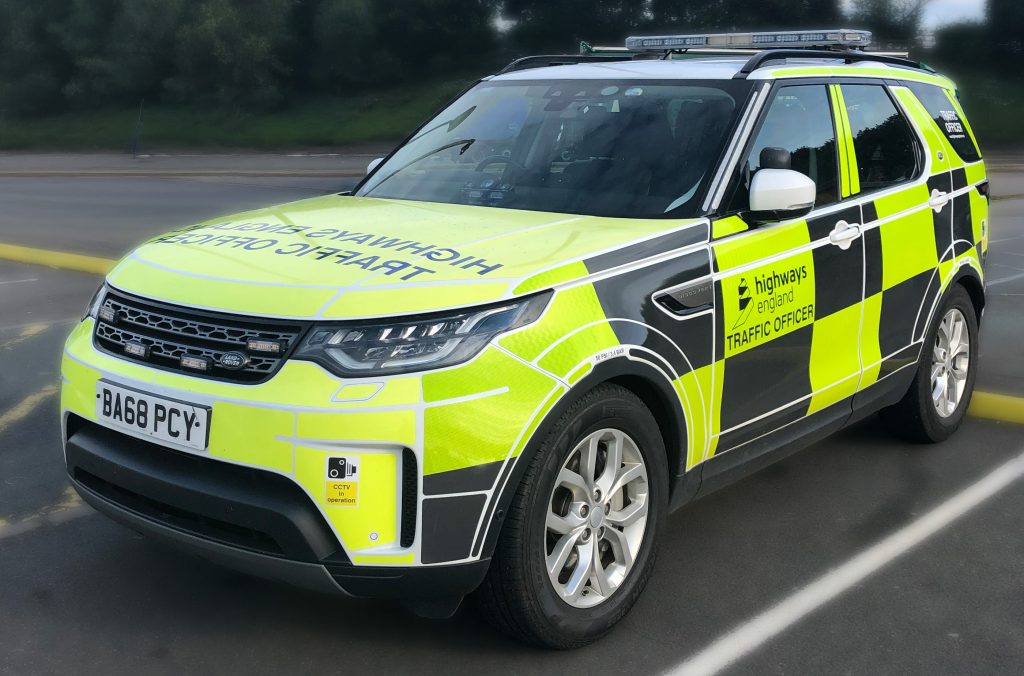
Left – The versatility of the Discovery wasn’t lost on the Highways Agency who, in 2019 took delivery of a fleet of 70 Td6 Discovery’s. Fitted with roof lights and a rear programmable LED notice board at the rear, the interior space would carry over 600 kg of traffic cones, supplementary lighting and safety barriers.
In November 2020, the 21-model year was introduced and once again the engine line up changed, and only the P300 four-cylinder petrol remained from the previous offerings. A new six-cylinder petrol engine was introduced. With a 3-litre capacity, it offered 360 HP and was called the P360. The four cylinder Turbo Diesel was replaced by a six-cylinder version, offering either 249 HP D250 or 300 HP D300. All the 3 litre engines now came with Land Rovers 48v MHEV system. Also new for the 21MY was the Commercial version. With the rear seating removed and the rear windows blacked out, it offered additional underfloor storage where the rear footwells once were. R-Dynamic was also introduced offering the buyer a number of external sporty trim options. The tech was also upgraded with the previous infotainment system being replaced by the new Pivi-Pro system that was introduced in the L663 Defender.
Once the 35-year anniversary arrived in 2024, another special edition was launched. Called the 35th Edition introduced the D350 six-cylinder Turbo Diesel to the range, replacing the D300. With a zero to sixty time of sub six seconds, it was the fastest and most powerful Turbo Diesel engine offered in the Discovery.
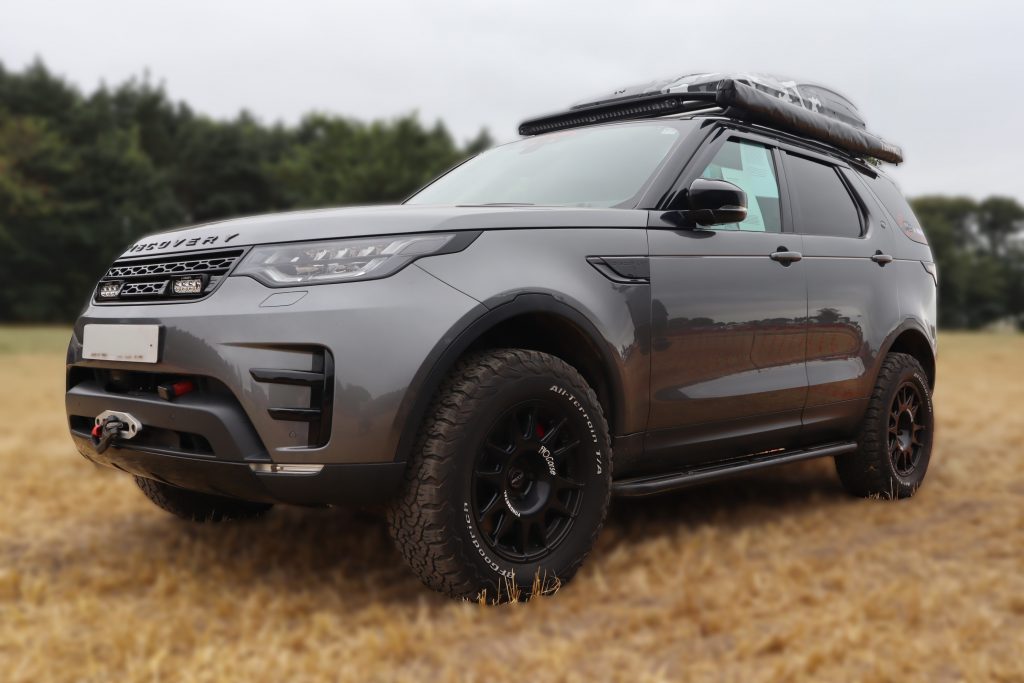
Above – Refined on the road and very capable off it, the Discovery certainly appealed to the adventurous family.
Come the 26 Model year, it was clear something was needed. The Defender was proving to be a huge sales success and some of this success came at the expense of Discovery sales. Land Rover decided to move the Discovery more upmarket when they introduced the Tempest. The Tempest was the flagship model in the Discovery line up and was joined by the lower specification Gemini. As Discovery sales continue to struggle it isn’t clear where the Discovery will go next. The Range Rover and Range Rover Sport continue to move further upmarket in line with Land Rovers marketing strategy of lower volume and higher value vehicles meaning there is room for a more luxurious vehicle to sit beneath them. With no official news from Land Rover on the Discovery’s future, we only have speculation. As I see it there is only two options. Firstly, gracefully retire the Discovery or secondly re-invent it. Only time will tell which direction will be followed.
Below – The Discovery Tempest was launched to sit at the top of the Discovery range, and take the brand further upmarket.
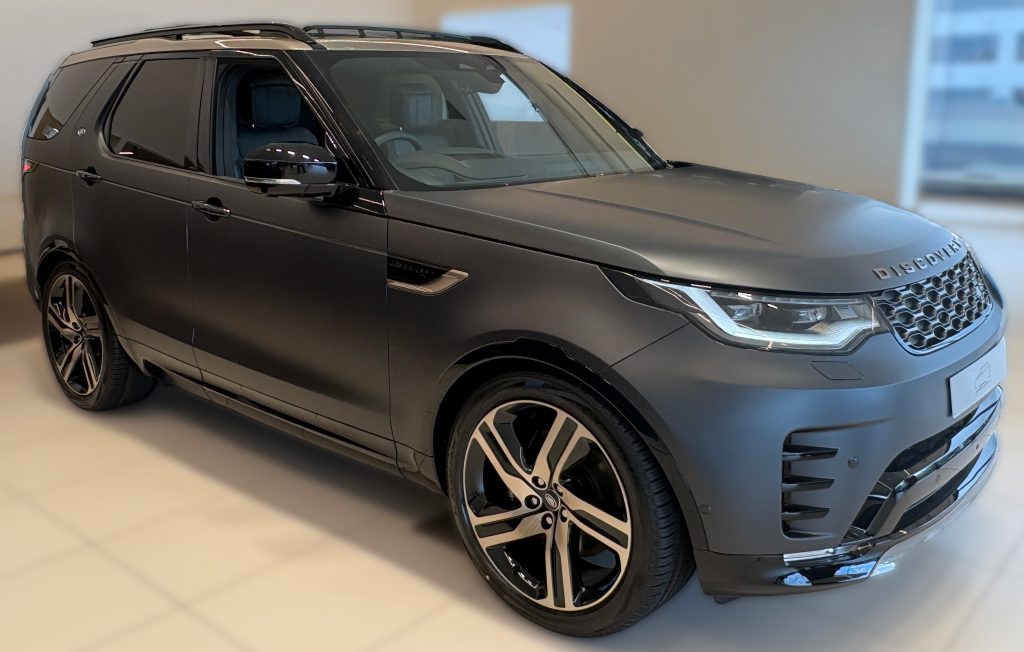
As you can read in this current issue of the e-Zine, the Discovery Landmark edition has made a re-appearance. Is this the swansong edition? Who knows. The Discovery can be an appealing prospect, but what are they like to live with? Well, LRL Admin Dave Cook has had two, so I will pass you over for the owner’s perspective.
Living with a Discovery 5 – Why Mine Has Won Me Over, by Dave Cook
When the Discovery 5 (L462) was launched in 2017, many people felt Land Rover had moved too far away from the traditional Discovery formula. Gone was the boxy, upright shape that had defined the Discovery for nearly three decades. In its place came a sleeker, more aerodynamic design, aluminium construction and an interior packed with technology. To some, it wasn’t a “proper” Discovery anymore with looks only a mother could love.
My own journey with the Discovery name actually goes back quite a bit further, and I’ve had the privilege of owning two Discovery 4s before moving to the L462. The first was a 2010 Commercial XS in Galway Green, powered by the 2.7 TDV6 with a manual gearbox. It was a proper workhorse in every sense, simple, robust and incredibly capable. My second Discovery 4, and my personal favourite, was a 2014 HSE model in Firenze Red, fitted with the SDV6 diesel and my 1st Automatic gearbox. That vehicle really showed what the Discovery was capable of: effortless torque, long-distance comfort and genuine all-round versatility.
However, when the L462 was 1st launched in 2017, a commercial Version wasn’t an option initially, and as I had come to the end of the D4 lease plus the 130k miles on the clock, it was time to change. That led to a brief flirt with another Marquee and a BMW X5 40e arrived. 18 months later after no end of problems it went back – serves me right from leaving Land Rover!!
Below – This was David’s first Discovery 5, a Corris Grey SDV6
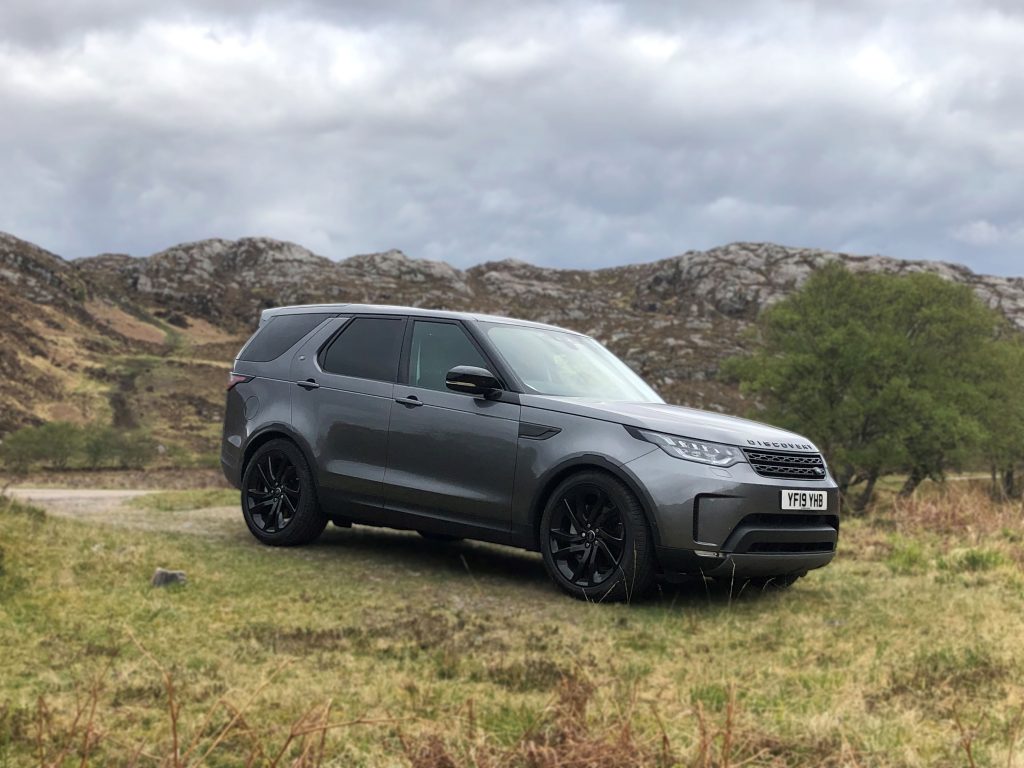
After those experiences, stepping into a Discovery 5 Commercial was a natural progression, even if it did feel like a significant change in direction form the D4 model with the level of luxury and ride quality taking it up towards the Range Rover models. A 2019 Discovery Commercial HSE 3.0 SDV6 in Corris Grey was chosen, which carried my Dogs, work and shooting gear through Covid chalking off 120k in 4 years.
When it was due to be replaced, I seriously considered getting a Defender hard top and took the 90 & 110 versions for long test drives with versions on coils or air suspension. All were great, comfortable drives and had lot of space for storage, but at that time the hands down winner was the Discovery. More comfortable, handled better on country road, faster, more space and cubby holes for storage. Better looking? Not as nice as the 90, but in my eyes better than a 110/130. I extended the lease on that D5 as due to the electronics shortages that affected the whole motor industry.
Then eventually after an 18 month wait, came my latest Disco, a 2023 Discovery Commercial HSE D300 in Yulong White with a black pack. That had the latest straight 6, 3.0 litre diesel engine. It was so smooth that effortlessly took you to the national speed limit, where I obviously stayed. I imagine it could easily do the 130mph stated by the manufacturer……..
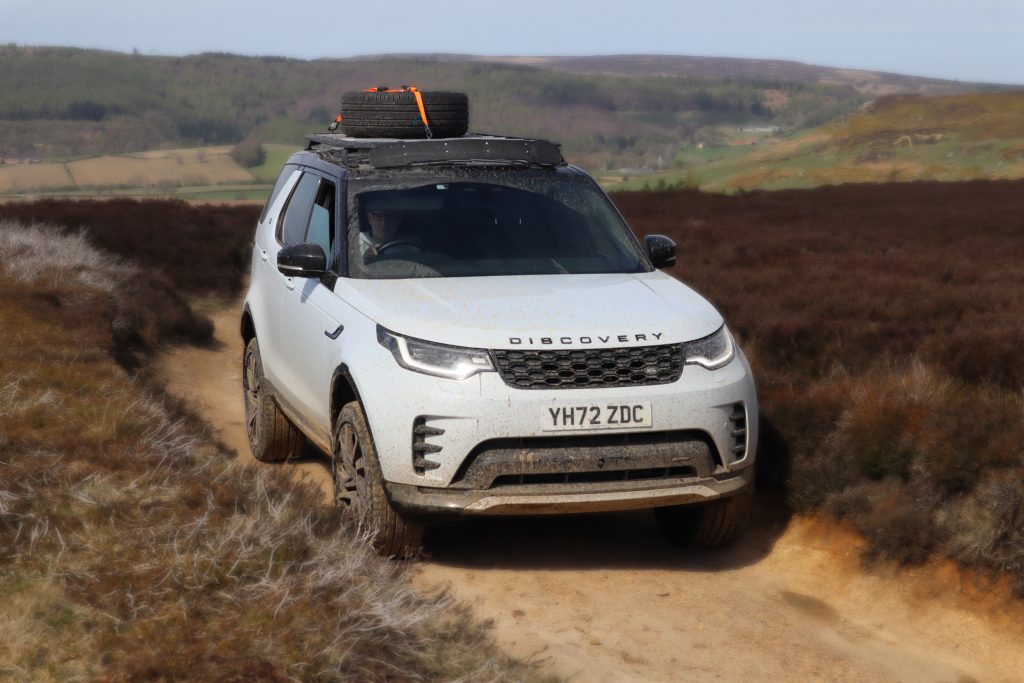
Above – David’s second Discovery 5 was this R-Dynamic commercial with the 3 litre Inginium straight 6 Turbo diesel
Then there’s the practicality. Despite the more modern styling, it’s still unmistakably a Discovery where it matters. Seven full-size seats in the car version with a huge load area, clever storage solutions and genuine family usability means it continues the tradition of the being the most versatile vehicle on the road.
Of course, no discussion about a Discovery would be complete without mentioning its off-road ability. Although mine spends most of its time on tarmac, it’s was reassuring to know that underneath all the luxury is one of the most capable 4x4s available. I’m part of a game shooting syndicate which sees me working at one of our farms most weekends across the winter season, with a lot of muddy off road driving required. Terrain Response 2, adjustable air suspension and impressive ground clearance means it can tackle conditions that many owners will never experience, but it’s comforting to know it can easily, especially with General Grabber AT3 tyres I added.
Like every Land Rover, the Discovery 5 has attracted its share of criticism. Much of it centres around styling or concerns about complexity/reliability. Yet I sometimes wonder how much of that criticism comes from people who have never actually owned one. Every vehicle has its faults, regardless of manufacturer, (look at that BMW X5) but ownership often gives a far more balanced perspective than internet forums or social media discussions. Did I have any problems? EGR valves on both D4’s that each had 130k miles and 1 oil pump blew. While the 1st D5 did 4 years and 120k miles with Zero issues bar 2 punctures, the second went back after 24 months and 60k miles without missing a beat. I also had/have 2 Discovery Sports, that (touch wood) have been as reliable as their sibling, with the current one now 10 years old. If any Land Rover diesel is driven for decent medium to high miles regularly with regular oil changes, problems should be minimal other than usual maintenance changes such as bushes and other consumables like brakes & shock absorbers
My own experience across both the Discovery 4 and Discovery 5 range has been overwhelmingly positive. Each vehicle has brought its own character, but all have shared the same core strengths: comfort, capability and genuine usability. The Discovery 5 has proved reliable, comfortable and incredibly enjoyable to own. It has handled everything I’ve asked of it without complaint, and every journey reminds me why I chose it in the first place.
Perhaps the Discovery 5’s biggest challenge isn’t its engineering but the fact that it had the difficult task of fitting in an ever-evolving Land Rover family. With the Range Rover being both luxurious and as capable off road as the Disco, with Defender seeing more powerful and modified versions all starting to eat into one of Land Rover’s most iconic models market. Change is never easy, especially within enthusiast communities such as ours, and comparisons with its predecessors were inevitable.
Would I buy another one? Without hesitation.
I’ve recently moved into the private buyers market selecting a Range Rover L405 V8. That makes me grin from ear to ear every time I floor it (only to the speed limit as always!) and it’s so comfortable, but now the V8 has been in my system and ticked that box, a Discovery is calling me again
Sometimes the best way to understand a vehicle isn’t by reading reviews or listening to opinions, it’s by owning one. For me, the Discovery 5 has been exactly what a Discovery should be: a vehicle that’s equally at home carrying the family across the country, towing with confidence or venturing off the beaten track when called upon.
That’s why, despite all the debate surrounding the L462, I’m glad they have been part of my life and will be again.